








Choosing the right thermal sensors for various applications can be complex. There are many types of thermal sensors available. Each serves unique purposes and offers different benefits. Understanding these differences is crucial for effective implementation.
Thermal sensors are essential in industries like automotive, medical, and manufacturing. They measure temperature with precision. This accuracy can significantly impact product quality and safety. A wrong choice may lead to malfunctions. Thus, careful consideration is necessary.
Factors such as sensitivity, range, and installation conditions must be assessed. A sensor that works well in one environment might fail in another. Experience with specific applications can guide better decisions. Reliable data and expert insights are invaluable when selecting thermal sensors. Everyone must evaluate their needs to avoid costly mistakes.
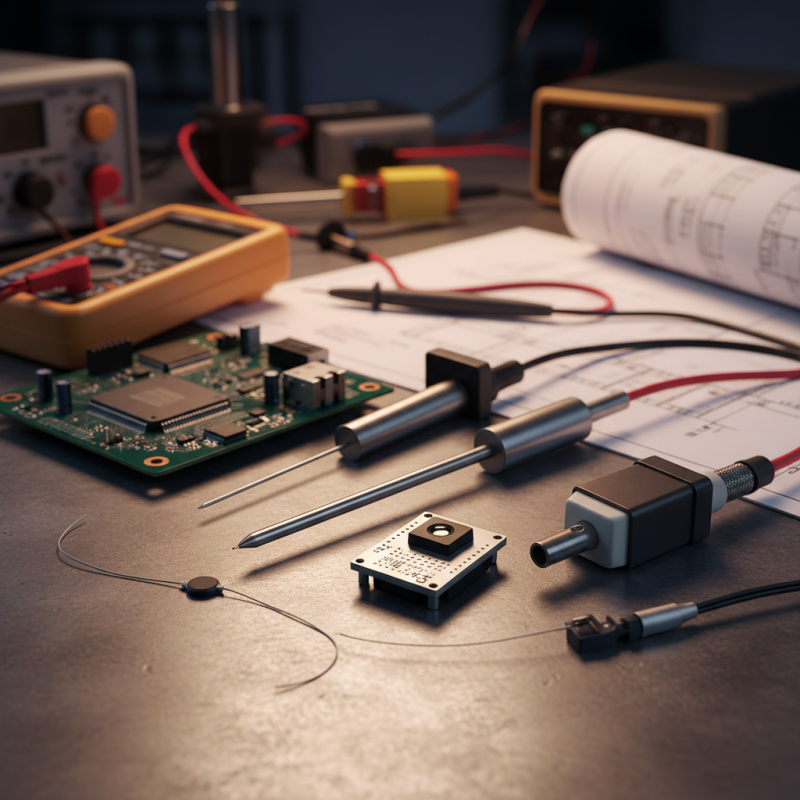
Thermal sensors play a crucial role in various applications, from industrial processes to consumer electronics. Understanding the types of thermal sensors is vital for selecting the right one. Two common types are thermocouples and thermistors. Thermocouples are known for their wide temperature range and robustness. They are often used in high-temperature environments. On the other hand, thermistors are more sensitive and suitable for applications requiring precise temperature measurements. They excel in measuring temperatures in medical devices or HVAC systems.
In selecting a thermal sensor, consider factors such as temperature range, response time, and installation environment. Sometimes, the right choice might not be obvious. For instance, a thermocouple might seem preferable for its robustness, but a thermistor could provide better accuracy in critical applications. Don't overlook the importance of the material and design. A poorly designed sensor may lead to inaccurate readings.
Additionally, be mindful of the sensor’s integration with existing systems. Compatibility is often an underrated factor. Misalignment can result in performance issues that are hard to diagnose. Reflecting on these aspects can enhance the reliability of your thermal sensing solutions. The decision-making process might be complex, but investing time in understanding these variables will yield better performance in your applications.
This chart illustrates the various types of thermal sensors and their respective applications in different fields. The data shows the usage percentage of each sensor type based on industry demand.
Choosing the right thermal sensors requires careful consideration. Understanding your application's specific needs is crucial. Different industries have different demands for temperature accuracy. Sensor sensitivity to temperature variations is one element to evaluate. Opt for sensors that react promptly to changes. In critical environments, a few seconds of delay can lead to significant issues.
Sensitivity is just one factor. You should also consider the range of temperatures the sensor can accurately measure. Some applications involve extreme temperatures, demanding robust sensors. Additionally, installation and maintenance should fit your operational capabilities. A sensor requiring complex setup may not be ideal for every environment.
Lastly, think about the sensor’s material compatibility. Sensors often face harsh substances or varying atmospheres. Ensure your chosen sensor can withstand these conditions. It’s essential to balance all these factors while considering the potential trade-offs. Sometimes, a cheaper option may lead to reliability issues. Reflecting on these aspects may lead to better long-term outcomes.
| Parameter | Description | Typical Applications | Pros | Cons |
|---|---|---|---|---|
| Thermocouples | Measure temperature via voltage differences across two metal junctions. | Industrial ovens, kilns, and heat treating. | Wide temperature range, fast response time. | Less accurate at lower temperatures, requires calibration. |
| RTDs | Measure temperature based on the resistance change of a metal. | Food processing, pharmaceuticals, and HVAC systems. | High accuracy, stable over time. | More expensive, slower response time than thermocouples. |
| Thermistors | Temperature-sensitive resistors; resistance changes significantly with temperature. | Medical devices, automotive applications, and HVAC controls. | High sensitivity, good for low-temperature measurements. | Limited temperature range, nonlinear response. |
| Infrared Sensors | Detect temperature by measuring infrared radiation emitted by objects. | Non-contact temperature measurement in various fields. | Non-contact measurement, quick readings. | Can be affected by environmental factors, calibration required. |
| Bimetallic Sensors | Utilize two different metals bonded together that expand at different rates with temperature. | Home appliances, automotive applications, and HVAC systems. | Robust, simple design. | Lower accuracy compared to electronic sensors. |
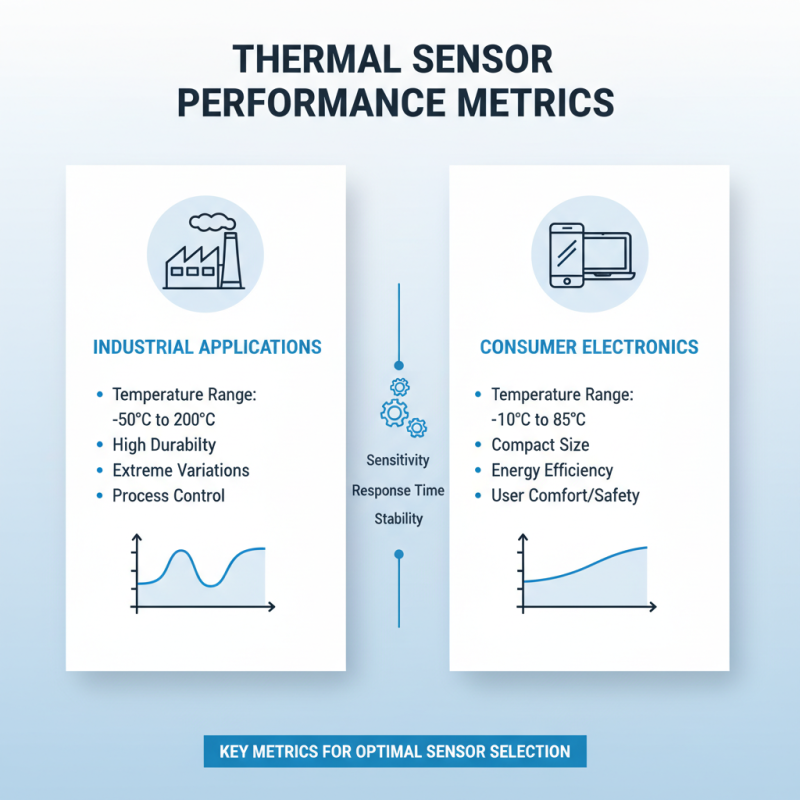
Thermal sensors play a critical role in various applications, from industrial processes to consumer electronics. Evaluating performance metrics is essential for selecting the right sensor. Key metrics include temperature range, sensitivity, response time, and stability. Each application may require different specifications. For instance, industrial applications often need sensors that can handle extreme temperature variations, typically from -50°C to 200°C. However, consumer electronics usually function within a narrower range of -10°C to 85°C.
A recent report from the International Society of Automation (ISA) highlighted that 31% of thermal sensor failures stem from inadequate response time. Many applications demand sensors that can react within milliseconds to avoid overheating. Thus, response time is critical. Additionally, calibration stability is necessary for long-term accuracy. If a sensor drifts over time, it can lead to significant errors in temperature readings. Experts emphasize this aspect when designing sensor systems.
Understanding these performance metrics can help in refining choices for specific applications. Many users often overlook sensitivity in thermal sensors. Sensors with higher sensitivity can detect smaller temperature changes, which can be vital in research and development settings. However, higher sensitivity can also mean more noise. Balancing sensitivity and noise is a nuanced decision that warrants careful consideration. Not all sensor types will fit every project's needs, making a thorough evaluation essential.
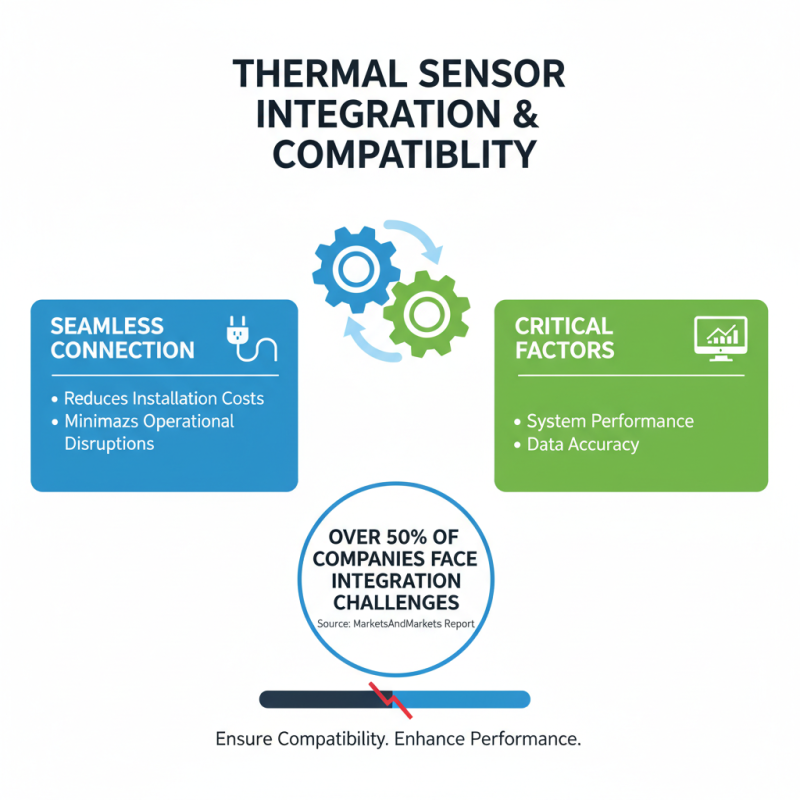
When selecting thermal sensors, integration and compatibility with existing systems are critical factors. Ensuring that the sensor can seamlessly connect with current infrastructure reduces installation costs and operational disruptions. According to a recent report by MarketsandMarkets, over 50% of companies face challenges with sensor integration, affecting performance outcomes and data accuracy.
Compatibility extends beyond hardware. Software interfaces must align to ensure smooth data flow. For instance, if a thermal sensor uses a specific communication protocol, the existing system should support it. Industry surveys indicate that systems that are compatible see a 30% increase in operational efficiency. Additionally, compatibility ensures that analytical tools can interpret the data effectively, which is vital for real-time decision-making.
Evaluating the sensor's specifications is essential. Not all sensors fit all applications. Understanding temperature ranges, response times, and environmental factors can lead to insights. A mismatch could result in inaccurate readings or even system failures. Some users report that 25% of thermal sensors fail to meet their intended application standards, highlighting the importance of careful selection.
When selecting thermal sensors, a cost versus benefit analysis is crucial. Many options exist, and prices can vary significantly. Analyze your application's specific needs first. Consider the sensor’s accuracy and response time. A low-cost sensor might seem appealing, but its performance could compromise your project. Weigh the potential risks of failure against initial savings.
Benefits include reliability and durability. Choosing a robust sensor can reduce maintenance costs over time. Investing in higher-quality sensors often pays off in the long run. A better sensor can enhance efficiency and improve safety. However, ensure that the benefits justify the costs. A detailed comparison can help identify the right balance.
In some cases, a more expensive option may offer features that align perfectly with your requirements. However, not every application demands high-end technology. Reflect on your specific needs, as overspending is common. Look for feedback from past users. This insight might reveal surprising performance discrepancies in various models.