How to Choose the Right Thermal Sensors for Your Needs?
Choosing the right thermal sensors can significantly impact your projects. These sensors measure temperature accurately in various environments. Whether for industrial applications or home use, understanding your needs is crucial.
Thermal sensors come in different types, each with unique advantages and limitations. For example, some sensors excel in precision, while others offer faster response times. It's important to reflect on the specific scenarios you will face. Ask yourself: Is accuracy or speed more vital for my application?
Consider the environment where the thermal sensors will be used. Factors like humidity and exposure to dust can affect sensor performance. A reliable sensor should withstand harsh conditions without compromising data integrity. Balancing these aspects can be challenging, but it is essential for achieving optimal results.
Understanding the Basics of Thermal Sensors and Their Applications
Thermal sensors are crucial in various applications, from HVAC systems to advanced manufacturing. Understanding their basic concepts can enhance their usage. A thermal sensor measures temperature by producing electrical signals. These signals reflect environmental changes. For instance, infrared sensors are commonly used in non-contact temperature measurements. They can detect temperature variations from a distance, making them ideal for moving objects.
According to a recent industry report, the global thermal sensors market is expected to reach $3.54 billion by 2025. This growth is driven by increasing demand in automotive and healthcare sectors. Many organizations are now integrating thermal sensors into their systems to improve efficiency. However, one must also consider limitations. Factors like response time and environmental conditions can affect sensor accuracy. Choosing the right sensor requires a balance between application needs and sensor capabilities.
Understanding these elements is vital for optimal performance. Some sensors may not perform well in extreme conditions. It's essential to evaluate your specific environment before making a decision. As technology evolves, new types of thermal sensors are emerging. Continuous research is necessary to stay updated. This knowledge helps ensure the selected sensor meets both current and future requirements.
Identifying Your Specific Thermal Measurement Requirements
When selecting thermal sensors, understanding your specific measurement needs is crucial. Consider the temperature range you plan to monitor. Is it high, low, or somewhere in between? Each application demands different specifications. For example, industrial settings often face extreme temperatures. In contrast, a laboratory may require less extreme measures.
Next, think about accuracy and response time. Some processes need precise measurements instantly. Others can tolerate slight delays. Reflect on the environment where sensors will be used. Will they be exposed to dust, moisture, or chemical substances? Choosing the right enclosure can protect the sensors, but not all environments are predictable.
Lastly, consider installation and maintenance. Some sensors may require frequent recalibration. Others can be more straightforward. Factor in the space available for installation as well. Every choice should reflect an understanding of your unique needs. Making these considerations will help you select the best thermal sensor for your situation.
Evaluating Different Types of Thermal Sensors Available
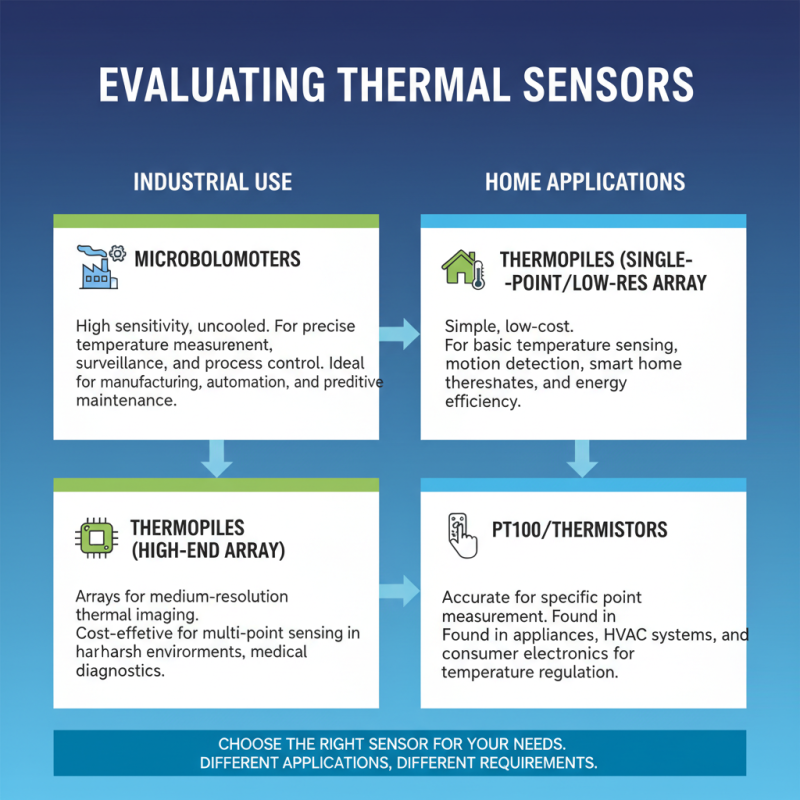
Choosing the right thermal sensor can be daunting. With various types available, it’s essential to understand their differences. Different applications require different sensors. Some sensors are better for industrial use, while others suit home applications.
Infrared sensors are common. They measure temperature without contact. This can be useful in situations where direct contact could be harmful. However, they may lack accuracy at greater distances. Be cautious when using them in critical applications.
Thermocouples are another option. They offer a wide temperature range. You can often find them in manufacturing. However, they can suffer from drift over time. Regular calibration is necessary to maintain accuracy.
Tips: Always assess your specific needs. Think about the environment where the sensor will be applied. Consider the temperature range, required accuracy, and response time. Don’t overlook the importance of installation and maintenance. Each factor can affect the sensor's performance significantly.
Key Features to Consider When Selecting Thermal Sensors
When selecting thermal sensors, focus on several key features. Accuracy is paramount. The sensor's precision affects the measurements it provides. According to a recent report by the International Society of Automation, a mere 1% error in sensor accuracy can lead to significant operational issues in industrial applications. Therefore, ensure that the sensors you’re considering meet strict accuracy standards for your application.
Another crucial aspect is the response time. In dynamic environments, quick response times can be critical. A sensor that provides real-time data allows for better decision-making. For instance, according to a study by the Thermal Imaging Association, for processes like temperature monitoring in manufacturing, a response time under one second can significantly improve safety and efficiency.
Consider the in which the sensors will operate. Some sensors thrive in extreme temperatures or humid environments, while others do not. It’s essential to understand these limitations. Many fail to account for the thermal stability of sensors under operational stress. A report from the Temperature Measurement Association suggests that neglecting this factor can result in system failures, leading to costly downtimes. Choose sensors designed for your specific operational conditions to mitigate these risks.
Comparing Costs and Selecting Vendors for Thermal Sensors
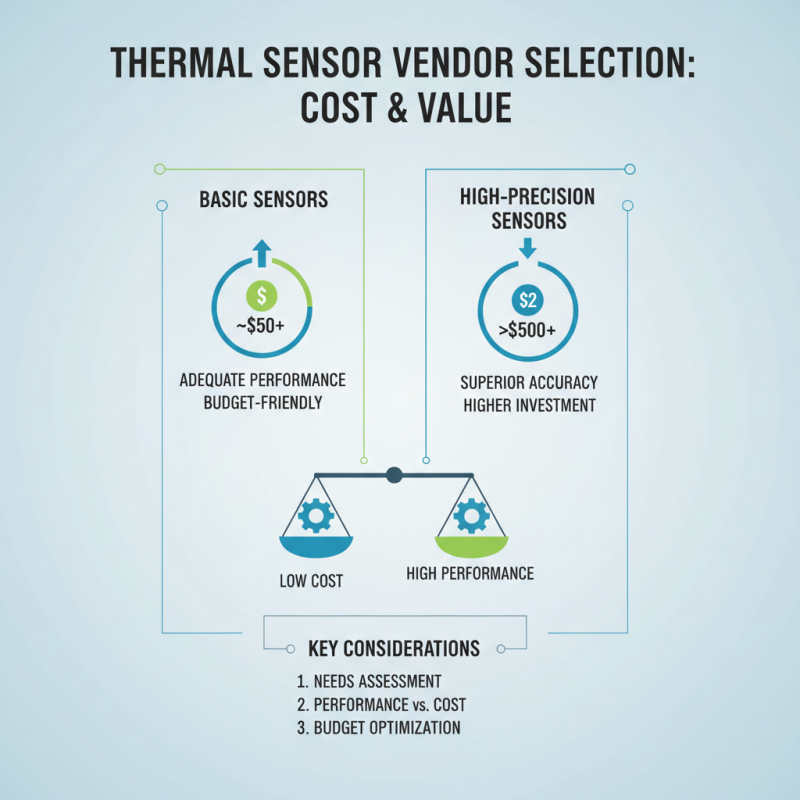
When selecting thermal sensors, cost is a significant consideration for organizations. The average cost of thermal sensors can vary widely. According to a recent industry report, basic sensors may start at around $50, while high-precision models can exceed $500. This disparity highlights the importance of understanding your specific needs. Investing too little might lead to inadequate performance, while overspending could strain budgets.
Vendor selection plays a crucial role in the procurement process. It’s essential to evaluate potential suppliers based on reliability and technical support. Reports indicate that 85% of companies prioritize supplier reliability over lower costs. Inadequate support can lead to more significant problems down the line. Additionally, assessing the vendors' history in delivering consistent quality is paramount.
Evaluate your budget against the specifications required. Thermal sensors with advanced features often justify their higher price through improved accuracy and durability. Some businesses may find themselves unsatisfied with their initial choice, recognizing only after implementation that they have either overpaid or opted for an insufficient solution. Balancing cost and vendor reliability ensures optimal performance and value for your thermal sensor investment.