






How to Choose a Conductivity Sensor in 2026?

In 2026, choosing a conductivity sensor starts with the process, not the product catalog. A clean-water line, a hot rinse tank, and a slurry pipe place different demands on a probe. The right choice depends on expected conductivity range, temperature, pressure, and the fluid’s chemistry. Small details matter. A sensor that performs well in a laboratory may drift or foul in a real process.

Measurement expert William Thomson, Lord Kelvin, famously wrote, “When you can measure what you are speaking about, and express it in numbers, you know something about it.” That principle is useful when comparing sensor specifications, but numbers need context. Check the stated accuracy, cell constant, temperature compensation, response time, and calibration requirements against actual operating conditions. Also consider wetted materials, cleaning access, mounting depth, and how the transmitter connects to your control system. A low purchase price can hide extra maintenance.

This guide outlines how to match sensor design and measurement range to the application, then assess installation and upkeep. It also highlights common trade-offs between contact and toroidal designs. No shortlist is perfect. I would treat any recommendation as provisional until it has been checked against a real sample and process cycle. A conductivity sensor is only as dependable as its installation, calibration, and care.
How to Choose a Conductivity Sensor in 2026?

Define the Conductivity Measurement Requirement

Define the Conductivity Measurement Requirement

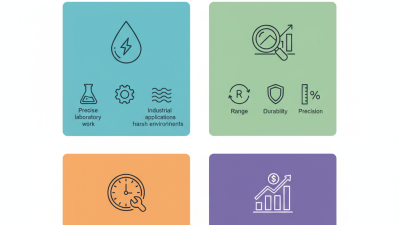
Before comparing conductivity sensors, describe the liquid and the decision the reading must support. Is the sensor checking purified water, a rinse tank, or a concentrated process solution? These conditions call for different measurement ranges and cell designs. Record the expected minimum and maximum conductivity, not just a typical operating value. A rinse tank may swing sharply after a production batch.

Temperature matters. Conductivity usually changes as liquid temperature changes, but the correction depends on the solution. Specify whether readings must be temperature-compensated and at what reference temperature. Also define the required accuracy and response time. A slow trend in a storage tank may tolerate a slower response; a fast process adjustment may not. Small details matter.

Next, examine the installation. Note pipe diameter, available insertion space, flow rate, pressure, and cleaning conditions. These details help determine whether a contacting or inductive sensor is suitable. Consider how the signal will reach the control system, and whether operators need local readings or alarms. Include calibration access and the time available for maintenance. A sensor that is accurate on paper can be awkward to clean in a cramped line.

Some requirements will be estimates at first. Mark them as estimates rather than treating them as confirmed facts. I have seen specifications overlook brief rinse cycles; those short events can exceed the normal range. Check process logs or take measurements across a full operating cycle before finalizing the range.

How to Choose a Conductivity Sensor in 2026? — Define the Conductivity Measurement Requirement

First define the expected sample and conductivity range. These approximate water-conductivity bands, in µS/cm at 25°C, illustrate how widely measurement requirements can differ. Actual values vary with water composition and temperature. Select a sensor whose range and accuracy suit the application, and confirm its temperature compensation and calibration requirements.

Match Sensor Technology to the Expected Measurement Range

How to Choose a Conductivity Sensor in 2026?

Match Sensor Technology to the Expected Measurement Range

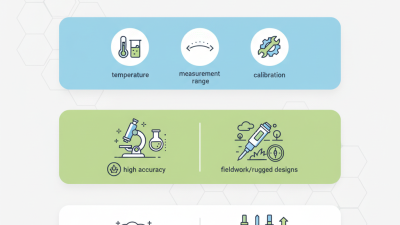
Start with the sample’s expected conductivity, not just the instrument’s maximum range. Very pure water needs a sensor with a low cell constant and a clean, well-controlled measurement path. Even a small amount of residue on the electrodes can distort readings. For moderate or changing conductivity, a four-electrode sensor can cover a wider range and reduce polarization effects. Highly conductive, dirty, or corrosive liquids may suit an inductive sensor, which measures without exposed electrodes. It is not ideal for very low-conductivity samples.

Check the full operating range, including the lowest value you expect during startup or rinsing. A sensor that performs well at the normal set point may become unreliable near its lower limit. Match calibration standards to the readings you care about, and confirm that the sensor’s temperature compensation fits the sample. Temperature correction helps, but it cannot fix a poor sensor-range match. I have seen this overlooked.

Assess Process Conditions and Wetted Materials

Choosing a conductivity sensor starts with the process, not the catalog. Note the normal and peak temperatures, operating pressure, flow rate, and expected conductivity range. A sensor near a heater may see hotter liquid than the tank reading suggests. Bubbles, suspended solids, and deposits can also make readings unstable. If the process includes cleaning or sterilization cycles, check whether the sensor can withstand those conditions repeatedly.

Tips: Write down the actual fluid, temperature range, and cleaning routine. Compare these with the sensor’s stated limits. A quick compatibility check can prevent premature wear.

Then assess every wetted material, including the sensor body, electrodes, seals, and cable entry. Stainless steel may suit many clean water applications, while acids, salts, or solvents may call for different materials. PTFE, PEEK, graphite, and other options each have limits; confirm compatibility at the real concentration and temperature. A tidy datasheet match can still disappoint in the line, so revisit the assumptions with a process engineer or materials specialist. Also consider installation: a poorly placed sensor may trap air or collect residue. That detail is easy to miss.

Check Calibration, Integration, and Maintenance Needs

How to Choose a Conductivity Sensor in 2026?

Check Calibration, Integration, and Maintenance Needs

Calibration needs should match the water you measure. A sensor used in clean rinse water may need a different range from one in a concentrated process stream. NIST reference data gives 1.408 mS/cm at 25°C for a 0.01 mol/kg potassium chloride solution. Use a certified standard near your normal operating range, and check the sensor’s cell constant. The USGS National Field Manual reports specific conductance corrected to 25°C, so confirm the instrument’s temperature compensation works as expected. Small temperature errors can distort readings.

Integration deserves a bench test, not just a wiring check. Confirm the output matches your control system, whether it uses an analog signal or a digital protocol. Check cable length, connector rating, and the available space around the probe. In a narrow pipe, bubbles or deposits may affect readings. I’d also verify how often operators can access the sensor; an ideal specification is less useful if routine checks are awkward.

Tips: Keep a calibration log with date, standard value, and temperature. Inspect the probe for film or scale, then rinse it before testing. Set an alarm for drift, but treat it as a prompt to investigate, not proof that the sensor has failed.

Compare Lifecycle Cost, Reliability, and 2026 Specifications

How to Choose a Conductivity Sensor in 2026?
Compare Lifecycle Cost, Reliability, and 2026 Specifications

Choose a sensor for the liquid, operating range, and installation—not just its purchase price. Check the specified conductivity range, accuracy, temperature compensation, wetted materials, and output signal against your process. A sensor used in a warm cleaning line may need different materials and compensation than one monitoring a cool water tank. Small details matter. In 2026, compare current datasheets carefully; specification formats and test conditions can differ.

Lifecycle cost includes calibration, cleaning, replacement parts, downtime, and staff time. Ask how often the sensor needs verification and whether deposits or bubbles can distort readings. A lower-cost unit may be economical in a clean, stable process, but costly where access is difficult. Reliability claims need context. Request test conditions, response time, and documented performance in similar fluids. I would not treat a single accuracy figure as proof of long-term stability.

Tips: Compare at least three datasheets using the same range and temperature conditions. Check connector protection and cable length for your installation. Estimate yearly maintenance before buying. Then confirm the sensor’s output works with your existing controller. Measurement conditions can be messy; leave room for that uncertainty.

How to Choose a Conductivity Sensor in 2026? — Compare Lifecycle Cost, Reliability, and 2026 Specifications

Sensor type Best suited to 2026 specification checks Reliability considerations Maintenance and lifecycle cost
Contacting, 2-electrode Clean water and other applications where the expected conductivity fits the selected cell constant and measuring range. Confirm cell constant, stated range, accuracy, wetted materials, temperature rating, pressure rating, and compatible transmitter. The usable range is model-dependent. Straightforward design, but electrode fouling, deposits, or polarization can affect readings, particularly when the application is outside the sensor’s intended range. Often a lower initial-cost option. Allow for periodic cleaning, verification, and possible replacement if deposits or chemical attack shorten service life.
Contacting, 4-electrode Applications needing a broader conductivity range than a particular 2-electrode design can cover, including many process-water uses. Check the manufacturer’s stated range, accuracy across that range, cell constant, temperature compensation method, materials, and installation requirements. The four-electrode arrangement can reduce sensitivity to electrode polarization and changes in the effective measurement field; it does not eliminate fouling or installation effects. Initial cost may be higher than a basic 2-electrode sensor. Lifecycle cost depends on cleaning access, process deposits, calibration or verification frequency, and sensor life.
Inductive (toroidal, non-contacting electrodes) Many dirty, corrosive, or fouling process liquids, provided the liquid conductivity and installation meet the sensor’s specified limits. Confirm minimum and maximum conductivity, sensor dimensions, pipe or immersion arrangement, temperature and pressure limits, wetted-body compatibility, and transmitter compatibility. No exposed metal measuring electrodes can reduce electrode-related coating and corrosion problems. Coatings on the sensor body, air gaps, poor mounting, or unsuitable low-conductivity service can still impair measurement. Usually a higher initial investment. It may reduce cleaning or replacement costs in compatible fouling or corrosive services; compare total installed and maintenance costs for the actual process.
Temperature measurement and compensation All conductivity applications where readings must be compared at a reference temperature or used for process control. Check whether temperature is measured by an integrated element, the reference temperature used (commonly 25 °C), and whether compensation is fixed, adjustable, or based on a solution-specific model. Temperature compensation cannot correct for an incorrect solution model or a poorly located temperature element. Conductivity’s temperature response varies with solution composition and concentration. Correct compensation can reduce measurement errors and avoid process-control decisions based on temperature changes. Verify the sensor and transmitter settings during commissioning.
Calibration, verification, and connectivity Installations requiring traceable checks, reliable diagnostics, or integration with a control system. Review calibration or verification procedures, compatible conductivity standards, output type, communication protocol, diagnostic functions, and any required approvals for the installation. A suitable range and correct installation matter as much as headline accuracy. Check for air bubbles, flow effects, deposits, grounding or wiring issues, and transmitter configuration. Include labor, standards, cleaning supplies, downtime, spare parts, transmitter or cable replacement, and sensor replacement in the lifecycle estimate—not just purchase price.

Selection note: Conductivity ranges, accuracy, materials, and service life are product- and application-specific; there is no single specification that applies to every sensor of a given type. Obtain the current manufacturer datasheet and validate the selected model against the actual liquid, operating temperature, pressure, installation, and required measurement range.

Lifecycle cost comparison: Estimate total cost over the intended service period as purchase and installation cost + calibration and verification + cleaning and labor + downtime + spare parts and replacement. Use site maintenance records where available.