









Why Choose Sealing Mats for Global Sourcing?

Why Choose Sealing Mats for Global Sourcing? The answer begins with measurable industrial needs, not attractive catalog images. Sealing Mats support flange connections, pipe systems, pumps, and heat-sensitive equipment. Their performance depends on compression, chemical resistance, temperature stability, and surface finish. Small material differences can create visible leakage around a factory floor flange.

Industry data supports this purchasing category. Grand View Research’s Industrial Gaskets Market report tracks continued demand from energy, chemicals, manufacturing, and transportation. Fortune Business Insights also identifies industrial expansion and maintenance activity as major market drivers in its 2024 gasket market analysis. These reports use different definitions, so their market estimates should not be treated as identical. That matters.

Global sourcing can broaden access to graphite, PTFE, aramid fiber, rubber, and specialty elastomer formulations. It can also improve price comparison across qualified manufacturers. However, lower unit cost is not the same as lower total cost. The World Bank’s 2023 Logistics Performance Index emphasizes customs, infrastructure, and shipment timeliness as practical supply-chain factors. A delayed gasket can stop a production line. The details matter.

Reliable buyers should request batch records, material certificates, dimensional inspection results, and performance data. ISO 9001 systems may strengthen process control, while ASTM, EN, or application-specific standards help define testing expectations. Supplier audits remain valuable, even when documents look complete. No sourcing model is risk-free. Sealing Mats may look simple, but their failure can be expensive, unsafe, and difficult to explain. A careful global program therefore balances engineering fit, verified quality, logistics resilience, and honest supplier communication.
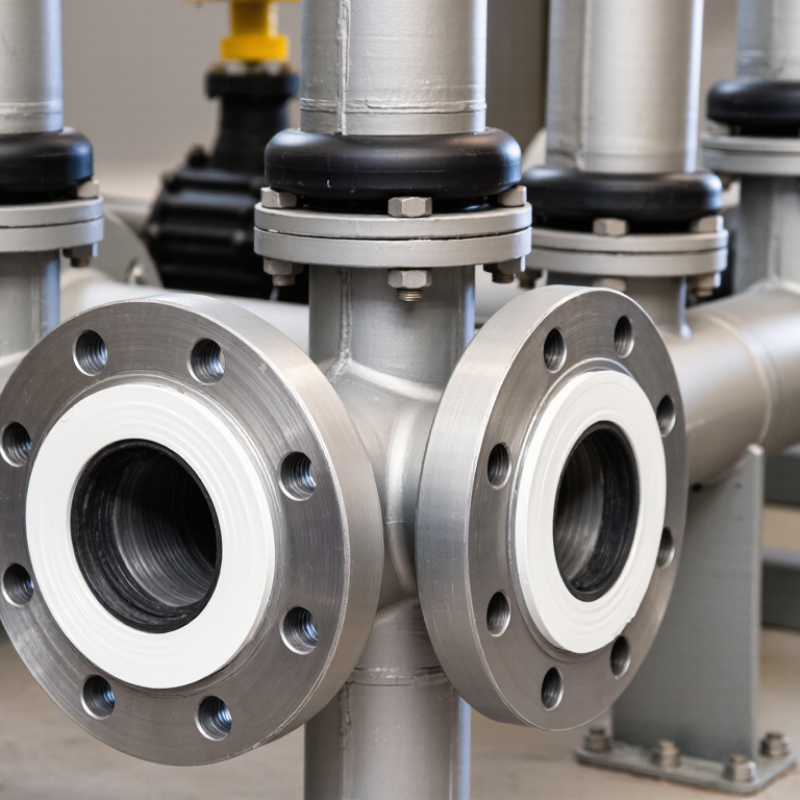
Why Choose Sealing Mats for Global Sourcing?

What Are Sealing Mats? A Gasket-Sheet Guide by Material and Function

Sealing mats are flat gasket sheets designed to be cut into custom sealing shapes. They sit between mating surfaces and prevent leaks from fluids, gases, dust, or pressure. This simple format supports global sourcing because one sheet can serve many equipment sizes. The correct choice depends on temperature, pressure, media, surface finish, and bolt load. Fit matters.

Material determines performance. Elastomer sheets suit water, air, and many low-pressure connections. Cork-rubber sheets compress easily and work well on flanges with minor surface irregularities. Compressed fiber sheets handle oils, fuels, and moderate heat when properly selected. Graphite sheets tolerate high temperatures and can seal demanding industrial joints. PTFE sheets resist aggressive chemicals, but they may creep under constant pressure. No material is perfect.

Function should guide the specification, not price alone. Request thickness tolerance, density, operating limits, test data, and lot traceability from suppliers. Check whether the sheet can be cut cleanly without tearing or excessive compression. In production reviews, small errors often appear at the edges, bolt holes, or storage stage. Humidity and poor packaging can change performance. I used to treat thickness as the main variable; that was incomplete. Surface condition and tightening control can matter just as much. A careful sourcing process compares the gasket material with the actual service conditions, not only a general material name.

Which Technical Metrics Matter? EN 13555 Measures Leakage, Compression, and Recovery

Why Choose Sealing Mats for Global Sourcing?

EN 13555 turns gasket selection into measurable engineering, not supplier preference. The standard evaluates leakage, compressibility, recovery, and creep relaxation under controlled loads. Test results commonly report leakage in mg/(s·m), seating stress in MPa, and recovery as a percentage. These values help engineers compare materials across countries and production batches. A practical sourcing review should request the full test curve, not only a pass statement. Small details matter. Flange finish, bolt load, temperature, and media can change performance dramatically.

The International Energy Agency’s Global Methane Tracker 2024 estimated around 120 million tonnes of methane emissions from fossil fuel operations in 2023. Not every emission comes from gaskets, but sealing quality remains part of the control chain. EN 13555 data can reveal whether a mat maintains contact after thermal cycling or loses compression too quickly. For a global project, procurement teams should align test conditions with actual service pressure and temperature. This is where many specifications become weak. A laboratory result may look excellent, yet installation training and flange alignment remain uncertain. I would also check batch traceability, calibration records, and recovery after unloading. The standard improves confidence, but it cannot repair poor assembly practice.

How Can ASTM F36/F36M Compression and Recovery Data Compare Suppliers?

Why Choose Sealing Mats for Global Sourcing?

When sourcing sealing mats globally, ASTM F36/F36M data offers a practical comparison point. The method measures compressibility under a defined load and recovery after unloading. These values show how a material may conform to flange irregularities and regain thickness during service.

Ask each supplier for the same details. Check sample thickness, test temperature, applied load, conditioning time, and recovery interval. A report showing only percentages is incomplete. Supplier A may report 12% compression, while Supplier B reports 9%. That difference means little if their test conditions differ. Test conditions matter.

In practical procurement work, I would place the reports side by side. Confirm the material construction, density, reinforcement, and production batch. A higher recovery value can support sealing stability, but it does not prove chemical compatibility or long-term durability. Compression results also depend on thickness and surface structure. This is easy to overlook.

ASTM F36/F36M is a test method, not a universal acceptance limit. Set project-specific limits with engineering input. Request repeat testing when results appear unusually high or low. Small variations may reflect normal production changes, but they may also reveal inconsistent processing. That uncomfortable question is worth asking before approval. A supplier who explains deviations clearly may offer more reliable technical support than one providing attractive numbers without test details.

How Do ISO 9001, ASME B16.20, and EN 13555 Support Global QA?

Why Choose Sealing Mats for Global Sourcing?

Global sourcing needs more than attractive pricing. It needs repeatable quality, clear records, and practical evidence. ISO 9001 supports this through controlled purchasing, documented procedures, corrective actions, and traceability. For sealing mats, that may include batch numbers, material records, inspection results, and approved production changes. These details help buyers investigate a failed seal instead of guessing.

ASME B16.20 provides recognized requirements for metallic gaskets used with specified flange systems. It addresses dimensions, materials, marking, and construction details. This helps different suppliers work from a common technical language. However, compliance should match the actual gasket type and flange application. A certificate alone is not enough. Engineers still need to check pressure, temperature, media, surface finish, and bolt loading.

EN 13555 adds performance data from controlled gasket tests. Useful values include leakage, compressibility, recovery, and creep relaxation. These results support design calculations and supplier comparisons. Test conditions matter greatly. A gasket tested under one pressure or temperature may perform differently in service. This is where global quality assurance becomes less tidy than expected. Some inspection reports look complete but omit important test details. Buyers should request full methods, sample identification, and revision-controlled documents. Field experience also matters. A sealing mat may pass laboratory testing yet fail after poor alignment or uneven tightening. Quality depends on the product, the joint, and the people installing it.

Why Choose Sealing Mats for Global Sourcing? — How Do ISO 9001, ASME B16.20, and EN 13555 Support Global QA?

A globally sourced sealing mat or gasket program is strongest when management-system controls, dimensional requirements, and application-performance data are used together. The standards below serve different quality-assurance purposes and should not be treated as interchangeable.

QA Dimension ISO 9001 ASME B16.20 EN 13555 Global Sourcing Value Typical Evidence to Request
Primary purpose Quality management system requirements for consistently providing conforming products and services. Dimensional and marking requirements for metallic gaskets used with specified flange standards. Test methods and gasket parameters used to characterize gasket performance for flange-joint design. Combines supplier-process confidence with product conformity and engineering performance data. Quality manual, controlled procedures, inspection records, product drawings, and test reports.
Scope of control System-level
Applies to the organization’s processes, risk management, documented information, and continual improvement.
Product-level
Addresses metallic gasket construction, dimensions, materials, identification, and applicable test requirements.
Performance-level
Provides standardized laboratory characterization for gasket behavior under defined conditions.
Helps separate supplier capability, part conformity, and application suitability during qualification. Scope statement, approved supplier list, inspection plan, certificate of conformity, and laboratory report.
Dimensional assurance Requires controlled processes and verification where needed, but does not define gasket dimensions. Defines relevant dimensional requirements for covered metallic gasket types and flange applications. Focuses on test methods and performance parameters rather than serving as a general dimensional standard. Reduces installation problems caused by incorrect gasket geometry, flange mismatch, or uncontrolled revisions. Revision-controlled drawing, dimensional inspection report, calibrated measurement records, and traceable part identification.
Material and identification control Supports documented purchasing, traceability, nonconformity control, and change management. Includes requirements related to materials and marking for applicable metallic gasket products. Characterizes gasket materials through defined tests; it does not replace a material specification or purchasing requirement. Improves material consistency across factories, countries, and replacement orders. Material certificate, heat or lot traceability, manufacturing batch record, marking photograph, and change notification.
Leakage performance Provides the process framework for controlling inspection and testing but does not establish one universal leakage value. Contains product requirements for covered gasket types; project-specific leakage acceptance may require additional specifications. Includes standardized methods for measuring gasket leakage under defined test conditions and reporting relevant parameters. Enables comparison of sealing performance when test setup, temperature, pressure, and gasket conditions are equivalent. Leakage test method, test conditions, measured leakage rate, test pressure, temperature, and specimen details.
Compression and recovery behavior Controls the process used to manufacture and verify products but does not prescribe gasket compression values. Primarily addresses metallic gasket requirements rather than providing a complete application-design test program. Provides test methods for parameters such as compression behavior, recovery, and related gasket characteristics. Supports flange-joint design, bolt-load planning, and selection for thermal or pressure cycling environments. EN 13555 test report, compression or recovery curves, test temperature, loading sequence, and specimen conditioning.
Supplier consistency Strong support
Uses process audits, corrective action, performance evaluation, and continual improvement.
Product-specific
Confirms whether the delivered gasket matches the applicable standard and purchase specification.
Test-specific
Improves comparability when laboratories use the prescribed methods and complete test conditions are reported.
Creates a repeatable qualification method instead of relying only on samples or price comparisons. Supplier audit report, corrective-action records, process capability data, repeat-test results, and periodic review records.
Change management Requires controlled changes to processes and documented information, with consideration of risks and conformity. Requires the product to remain compliant with the applicable edition and purchase requirements after design or material changes. Allows performance comparison of revised materials when equivalent test conditions and reporting practices are maintained. Reduces the risk that an unapproved material, tooling, or manufacturing-site change affects sealing reliability. Engineering change notice, requalification plan, updated drawing, revised material records, and customer approval log.
Best use in a sourcing workflow Supplier prequalification, process audit, complaint handling, and ongoing quality governance. Incoming inspection and conformity verification for applicable metallic gasket designs and flange interfaces. Technical comparison, gasket selection, flange-joint calculation inputs, and performance-based qualification. Supports a three-stage decision: qualify the supplier, verify the product, and validate the application. Supplier questionnaire, technical specification, inspection and test plan, first-article report, and batch release package.
Important limitation Certification does not automatically prove that every product is suitable for every service condition. Compliance does not replace verification of operating temperature, pressure, media compatibility, flange condition, and installation practice. Laboratory results are condition-dependent and should not be transferred to field conditions without engineering judgment. Use the standards as complementary controls, together with design calculations and service-specific requirements. Application datasheet, media and temperature limits, flange data, installation procedure, torque or bolt-load requirements.

Note: ISO 9001, ASME B16.20, and EN 13555 address different aspects of quality and sealing assurance. The applicable edition, gasket type, flange standard, service conditions, and purchasing specification should always be confirmed before approval.

How Do AQL 1.5/2.5, MOQ, Lead Time, and Landed Cost Shape Sourcing?

Why Choose Sealing Mats for Global Sourcing?

How Do AQL 1.5/2.5, MOQ, Lead Time, and Landed Cost Shape Sourcing?

Sealing mats support stable assembly when dimensions, compression, and surface quality remain consistent. In practical sourcing, AQL 1.5 for major defects and AQL 2.5 for minor defects offer useful inspection benchmarks. They do not replace clear drawings, approved samples, or functional testing. A buyer should define acceptable defects before production begins. Small gaps can cause serious leakage.

MOQ directly affects inventory risk. A low unit price may require thousands of pieces. That can create storage pressure and slow cash flow. A higher MOQ may reduce pricing, but only when demand is predictable. Trial orders can reveal packaging problems, edge damage, and fit issues before larger commitments. They cost more per piece. Still, they may prevent expensive mistakes.

Lead time includes material preparation, production, inspection, and export handling. It is rarely just the factory schedule. Add shipping, customs duties, insurance, local delivery, and handling charges to calculate landed cost. I have seen attractive quotations become expensive after freight and import fees were added. Buyers should compare identical specifications and delivery terms. One assumption often fails: faster production does not always mean faster arrival. Buffer time matters, especially during seasonal congestion or port delays. Clear inspection records and batch traceability also make quality decisions more reliable.