Top 10 Materials with the Highest Thermal Conductivity?
In the world of engineering and materials science, understanding the thermal conductivity of materials is crucial. Dr. Emily Chen, a leading expert in material properties, emphasizes, "The efficiency of thermal management is directly tied to the materials we choose." Her insight highlights the importance of selecting materials with high thermal conductivity.
Various materials exhibit unique thermal properties. Metals like copper and aluminum are well-known for their excellent thermal conductivity. However, newer materials like graphene are pushing the boundaries even further. Their unparalleled thermal performance opens doors to innovations in electronics and energy systems.
Yet, there are challenges to consider. Not all high-conductivity materials are suitable for every application. Cost, availability, and environmental impact play significant roles in material selection. This complexity demands thoughtful evaluation. The ongoing quest for the best materials reveals a landscape of both opportunity and uncertainty in harnessing thermal conductivity effectively.

Overview of Thermal Conductivity
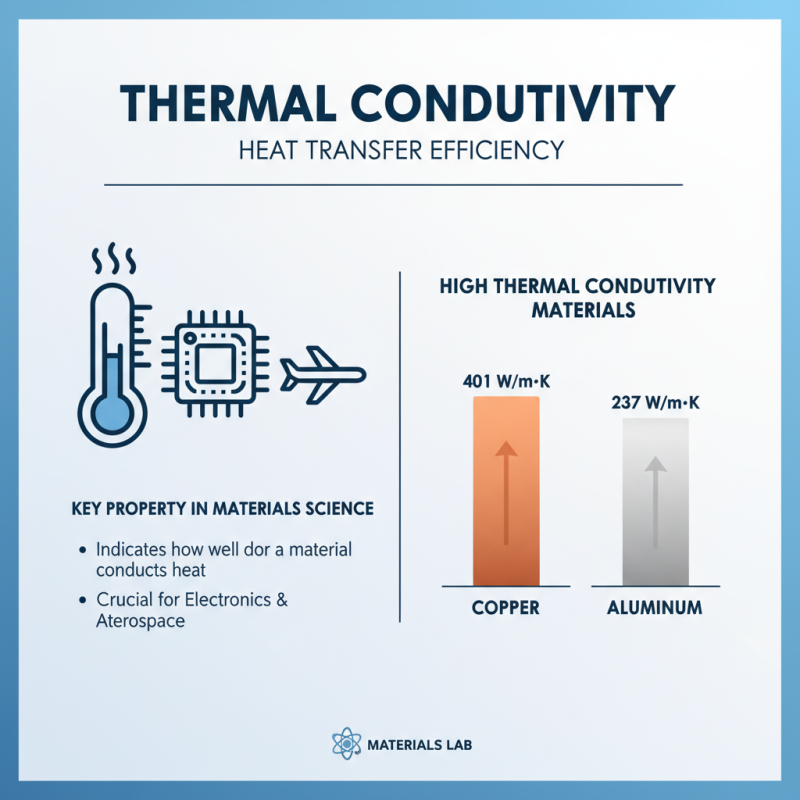
Thermal conductivity is a crucial property in materials science. It indicates how well a material can conduct heat. High thermal conductivity is often desired in applications like electronics and aerospace. For instance, metals like copper and aluminum have excellent thermal properties. Studies show copper boasts a thermal conductivity of around 401 W/m·K, while aluminum reaches about 237 W/m·K.
Choosing the right material can be challenging. Each application may have specific requirements. For example, diamond leads in thermal conductivity, with values exceeding 2000 W/m·K. However, it’s not always practical due to cost. Additionally, while many materials conduct heat well, they might lack other essential qualities, like strength or durability.
**Tip:** Consider both thermal performance and mechanical properties when selecting materials. This balance is vital in engineering applications.
Remember that high thermal conductivity does not always equal high efficiency in energy transfer. Poor interfaces and junctions can disrupt heat flow. Ensure to account for these factors in your designs. Quality of contact surfaces is significant—not just the material itself.
**Tip:** Regularly evaluate your designs. Rethink material choices based on evolving project needs. Thermal efficiency can greatly influence overall performance.
Definition and Significance of Thermal Conductivity
Thermal conductivity is a crucial property in materials science. It refers to a material's ability to conduct heat. This property affects energy efficiency in various applications. High thermal conductivity materials often find use in electronics, where heat dissipation is vital. Aluminum, with a thermal conductivity of about 235 W/m·K, is one common example.
Materials with high thermal conductivity enable better energy transfer. For instance, copper boasts a remarkable thermal conductivity of 400 W/m·K. This makes it ideal for heat exchangers and cooling systems. Researchers highlight that understanding these materials can lead to advancements in thermal management technologies. However, while many materials show excellent thermal properties, they may not be practical due to cost or availability.
Certain applications require materials that balance conductivity and insulation. Graphene exhibits extraordinary thermal conductivity, yet its production costs remain high. Using materials like expanded polystyrene for insulation can reflect the real-world challenges engineers face in selecting the right materials. The choice often involves trade-offs between performance, cost, and availability.
Top Conductive Materials and Their Properties
When discussing materials with high thermal conductivity, several key properties stand out.
Copper tops the list with a thermal conductivity of approximately 401 W/m·K. It excels in heat transfer and is commonly used in electrical and thermal applications.
Next, silver follows closely behind at around 429 W/m·K, making it the best conductor of heat. However, its cost restricts large-scale use.
Aluminum is another remarkable material, boasting a thermal conductivity of about 237 W/m·K. This versatile metal is lightweight and corrosion-resistant.
Graphene is gaining attention for its unique properties, showing a theoretical conductivity of up to 5000 W/m·K. However, practical applications are still under research.
Tips: When choosing materials, consider the balance between thermal conductivity and cost. Always assess the application’s specific needs.
For high-temperature environments, materials like tungsten with 173 W/m·K might suffice, but they can be cumbersome.
Don’t overlook the role of surface texture in thermal performance. A rough surface can disrupt heat flow, reducing overall efficiency.
In many cases, improving the interface between materials can enhance thermal transfer significantly, pointing to areas for potential improvement in existing designs.
Applications of High Thermal Conductivity Materials
High thermal conductivity materials play a vital role in various industries. These materials facilitate efficient heat transfer, making them essential in applications such as electronics, construction, and energy. Copper is a prime example. It's commonly used in wiring due to its ability to conduct heat effectively. Aluminum, too, finds its place in heat sinks and radiators, ensuring devices operate within safe temperatures.
In the world of electronics, efficient thermal management is crucial. High thermal conductivity materials help dissipate heat away from sensitive components, preventing overheating. This can extend the life of devices. In renewable energy systems, like solar panels, such materials improve energy conversion rates. They help maintain optimal operating temperatures, enhancing overall efficiency. However, the selection of these materials isn’t straightforward. Factors like cost, weight, and environmental impact also matter. Choosing the right material requires careful consideration of trade-offs.
Top 10 Materials with the Highest Thermal Conductivity
This chart illustrates the thermal conductivity of various materials, showcasing how efficiently they can conduct heat. The materials listed include metals and other substances known for their high thermal conductivity.
Future Trends in Thermal Conductivity Research
The field of thermal conductivity is rapidly evolving. Researchers focus on improving materials for electronics, batteries, and construction. New compounds show great promise. For instance, graphene has a thermal conductivity of around 5000 W/mK. This is much higher than copper, traditionally known for its excellent conductivity.
Future trends include nanomaterials. These tiny materials can enhance thermal performance while reducing weight. They hold potential for uses in various industries. Hybrid compounds combining metals and polymers are also being explored. Studies indicate they can surpass the thermal limits of existing materials.
Tips: Consider materials' thermal stability. High conductivity may come with thermal breakdown risks. It's crucial to balance conductivity with durability. Always evaluate the cost-effectiveness of advanced materials. Some promising options might not be viable in all scenarios. Explore new developments regularly to stay informed.
Top 10 Materials with the Highest Thermal Conductivity
| Material |
Thermal Conductivity (W/m·K) |
Applications |
| Diamond |
2000 |
Electronics, Heat Sinks |
| Copper |
401 |
Wiring, Electronics, Plumbing |
| Silver |
429 |
Jewelry, Electronics |
| Aluminum |
237 |
Construction, Packaging |
| Gold |
315 |
Electronics, Coatings |
| Brass |
109 |
Musical Instruments, Plumbing |
| Steel |
50 |
Construction, Tools |
| Graphene |
5000 |
Advanced Electronics, Composites |
| Carbon Nanotubes |
3000 |
Nanoelectronics, Materials Science |
| Boron Nitride |
1000 |
Insulating Materials, Electronics |