






Top 10 Corrugated Steel Pipe Manufacturers Worldwide

Corrugated Steel Pipe is a practical choice for drainage, culverts, stormwater systems, and other infrastructure exposed to demanding site conditions. Its corrugated profile provides structural strength, while coatings and material specifications affect durability and maintenance needs. These details matter in the field: a pipe beneath a busy road faces different demands from one carrying runoff across a rural access route. The World Steel Association’s World Steel in Figures 2024 reports global crude steel production of 1,892.2 million tonnes in 2023. That figure shows the scale of steelmaking, not the amount used for pipe. The distinction is easy to miss.

For buyers, comparing manufacturers requires more than a broad claim of global reach. Product dimensions, coating options, quality controls, delivery capacity, and project references can all influence whether a supplier fits a specific application. The Federal Highway Administration’s Hydraulic Design of Highway Culverts (HDS-5) offers technical guidance on culvert design, while ASTM A760/A760M covers metallic-coated corrugated steel pipe for sewers and drains. Requirements may differ by market, so buyers should check applicable specifications and verify current product documentation directly with manufacturers. This overview of the Top 10 Corrugated Steel Pipe Manufacturers Worldwide considers product range, manufacturing footprint, technical resources, and publicly available project evidence. Rankings are not a substitute for engineering review. No list can capture every local constraint.
Top 10 Corrugated Steel Pipe Manufacturers Worldwide

What Corrugated Steel Pipes Are and How They Are Used

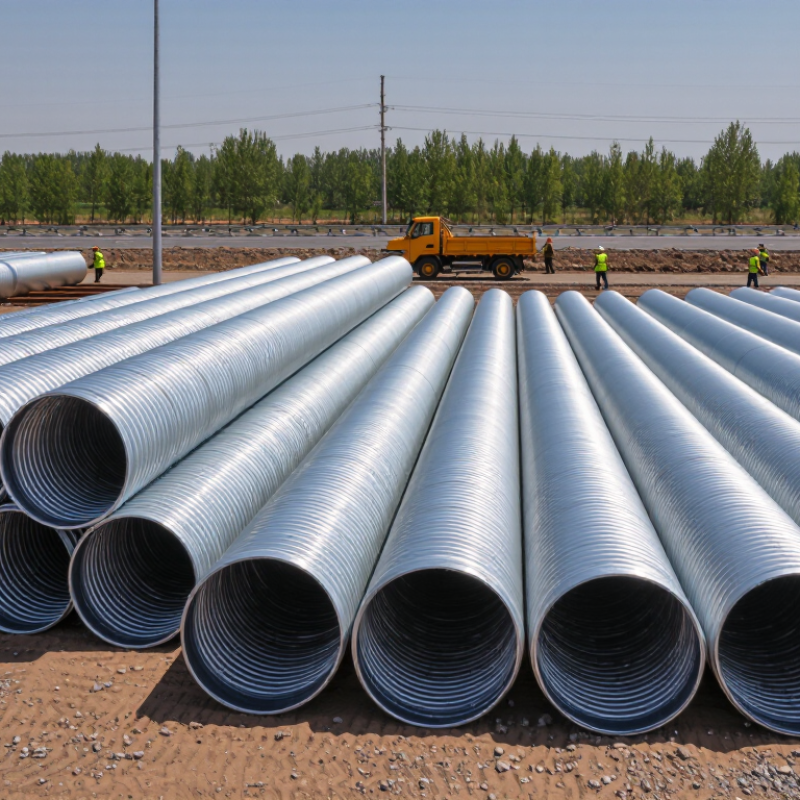
Corrugated steel pipe is formed from steel sheet with repeating ridges and grooves. Those corrugations add structural stiffness while keeping the pipe relatively light to transport and install. Depending on the project, the steel may have a protective metallic coating or an additional surface treatment. The pipe carries water beneath roads, railways, farm tracks, and other embankments, and can also serve in storm drainage and culvert systems.

Its shape is practical, but performance depends on the site. Engineers consider flow capacity, soil support, cover depth, corrosion, and abrasion from sediment. NCHRP Report 474, Service Life of Drainage Pipe, bases service-life assessment on field performance and environmental conditions, including soil and water chemistry. That matters: there is no reliable one-size-fits-all lifespan. A pipe in clean, mild conditions may perform very differently from one exposed to abrasive flow or corrosive soil. Small installation errors can matter, too.

Tips: Check soil resistivity and pH before selecting a coating. Match the pipe’s diameter and corrugation profile to expected flows, and inspect bedding and joints during installation. A drawing can look perfect; the trench still deserves attention.

How the Worldwide Manufacturer Landscape Is Evaluated

A credible comparison of corrugated steel pipe manufacturers starts with the product, not the sales pitch. Evaluators examine pipe profiles, steel thickness, joint design, and available diameters against the intended project conditions. Production capacity matters, but so does consistent quality across repeat orders. A large facility alone proves little.

Technical evidence helps separate capability from claims. Reviewers may check material traceability, dimensional inspection records, coating specifications, and documented quality procedures. They also consider how products perform under soil loads, water flow, and exposure to moisture or chemicals. Details matter. Clear test reports and practical installation guidance are stronger evidence than broad promises. Still, published data may not reflect every field condition.

The wider landscape is also assessed through delivery reliability, engineering support, and experience with comparable applications. Useful indicators include realistic lead times, responsive technical staff, and case histories that explain project requirements and outcomes. Independent references can add context, especially when they describe challenges as well as successes. No ranking is perfect. Weighting these factors involves judgment, and a manufacturer suited to one project may not fit another. Evaluators should disclose their criteria and verify important claims before drawing conclusions.

Top 10 Corrugated Steel Pipe Manufacturers Worldwide

Comparing the top 10 corrugated steel pipe manufacturers worldwide is not simply a matter of ranking production volume. A useful comparison looks at pipe dimensions, steel thickness, corrugation profiles, and connection options. These details affect handling and installation. Coating choices matter, too, especially when soil moisture or drainage conditions vary. Small specifications can change a project’s costs.

Buyers can review quality-control records, product testing, and documented project references when assessing manufacturers. Ask how production capacity, delivery times, and technical support fit the intended project. A supplier’s experience with similar diameters and site conditions may be more useful than a broad global reputation. No list is perfect. Rankings can shift with the criteria, and published information may not reflect current capacity. I would verify specifications directly and compare them against the project drawings before making a decision.

How Leading Manufacturers Differ in Products and Capabilities

Leading corrugated steel pipe manufacturers differ in product range, fabrication precision, and engineering support. Some focus on standard round pipe; others offer pipe-arches, structural plate, varied corrugation profiles, and custom fittings. Coating options and steel thickness matter too. AASHTO M 36 provides a technical specification for corrugated steel pipe, but meeting a specification does not make every supplier equally capable on a difficult site.

World Steel Association’s World Steel in Figures 2024 reports 1,892.2 million tonnes of crude steel production worldwide in 2023. This indicates a large raw-material supply, not consistent finished-pipe quality. Buyers should compare coating controls, dimensional tolerances, testing records, and documented quality procedures. The Federal Highway Administration’s Hydraulic Design of Highway Culverts (2012) emphasizes hydraulic conditions in culvert design; manufacturers with useful engineering support can help match pipe geometry to site flow and installation needs. Still, a catalog alone cannot prove that support is practical.

Tips: Request a recent inspection record and a project-specific drawing. Check available diameters, wall thicknesses, coatings, and delivery times against the actual site constraints. Ask how the supplier handles unusual inlets or tight installation tolerances. Small details can change the outcome.

Corrugated Steel Pipe Profiles: Comparing Corrugation Depth

Common profile geometries show how product offerings can differ. Depths are converted from the nominal inch dimensions; actual manufacturer availability and design limits vary.

Deeper corrugations are used in structural applications, but allowable spans and loads depend on the complete product, material, installation, and engineering design.

What Buyers Should Consider When Comparing Manufacturers

When comparing corrugated steel pipe manufacturers, look beyond quoted price and nominal diameter. World Steel Association’s World Steel in Figures 2024 reports 1,892.2 million tonnes of crude steel production worldwide in 2023. That scale does not guarantee consistent pipe quality. Ask for steel grade, coating type and mass, wall thickness, corrugation profile, and documented quality checks. Small details matter. A mill certificate helps, but it cannot replace inspection records for the finished pipe.

Check whether the supplier can provide calculations for the project’s flow, burial depth, and soil conditions. FHWA’s Hydraulic Design of Highway Culverts, HDS-5, explains how inlet control, outlet control, and site conditions affect culvert performance. Ask for the assumptions behind the proposed design, not just a capacity figure. It is easy to compare diameters and miss the effect of corrugation or installation conditions.

Delivery capability matters too. Review lead times, packaging, traceability, and how damaged coatings are handled during transport. Request sample inspection reports and confirm that the stated standard applies to the exact product being quoted. Ask for evidence. One uncomfortable point: paperwork can look complete while leaving gaps in coating or seam checks. Buyers should clarify those gaps before ordering, especially when replacement access will be difficult.

Top 10 Corrugated Steel Pipe Manufacturers Worldwide - What Buyers Should Consider When Comparing Manufacturers

Buyer comparison framework: the factors below are evaluation criteria, not a ranking of specific manufacturers. Applicable standards and requirements depend on the project and jurisdiction.

No. Comparison Dimension What Buyers Should Compare Evidence to Request Why It Matters
1 Standards and compliance Confirm the proposed pipe and fittings meet the project’s specified standard, such as ASTM A760/A760M or AASHTO M 36 where applicable. Current product specifications, test reports, and a written statement identifying the standard and edition used. Standards and editions can differ by market and project; a general claim of compliance is not a substitute for checking the specification.
2 Product range and configuration Compare available pipe shapes, diameters or spans, lengths, end treatments, and compatible fittings against the project drawings. Product catalog, dimensional drawings, and a project-specific bill of materials or quotation. A suitable range can reduce design changes, additional joints, and sourcing gaps for connected components.
3 Steel grade and base-metal thickness Check the specified steel requirements and the stated base-metal thickness; distinguish base-metal thickness from coating thickness. Material certificates, thickness tolerances, and product data linked to the purchase specification. Material and thickness affect structural design and must match the engineer’s calculations and applicable specification.
4 Corrugation profile and joint system Verify corrugation profile, coupling bands, fasteners, and joint details are compatible with the design and installation method. Profile drawings, joint details, assembly instructions, and confirmation of component compatibility. Profile and joint configuration influence assembly, fit-up, and the performance requirements specified for the installation.
5 Corrosion protection Compare the specified coating type and coating requirements, and assess whether they are appropriate for the site environment and design life. Coating specification, inspection or test records, and project-specific corrosion design assumptions. Exposure conditions, including soil and water chemistry, affect corrosion considerations; no single coating is suitable for every site.
6 Engineering and technical support Determine whether the supplier can provide product data and respond to design questions while leaving project design approval with the responsible engineer. Technical submittals, calculation inputs where offered, and a defined review and approval process. Complete, consistent technical information helps engineers check the proposed product against project requirements.
7 Quality management and inspection Review documented production controls and inspection procedures. Treat ISO 9001 certification, if provided, as evidence of a quality management system—not product certification. Valid certification details where applicable, inspection plans, nonconformance procedures, and sample quality records. Documented controls support consistent production, while product conformity still needs to be verified against the purchase requirements.
8 Manufacturing capacity and lead time Compare confirmed production slots, batch capacity, order cut-off dates, and the schedule for the required quantities and configurations. A dated production and delivery schedule, with assumptions for approvals, raw materials, and changes to the order. Quoted lead times are project- and order-specific; written schedule commitments make bids easier to compare.
9 Testing and traceability Check what inspection and testing are performed and whether delivered items can be linked to relevant production and material records. Inspection records, material documentation, lot or order identification details, and stated test methods. Traceable records help buyers verify deliveries and investigate quality issues if they arise.
10 Delivery, packaging, and after-sales support Compare delivery terms, packaging and handling instructions, damage procedures, warranty terms, and the process for resolving claims. Written quotation terms, shipping plan, warranty document, and named support contact or claims procedure. Clear responsibilities and documented procedures reduce ambiguity during transport, receipt, installation, and issue resolution.