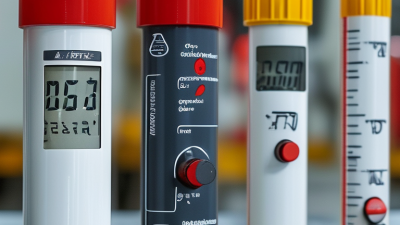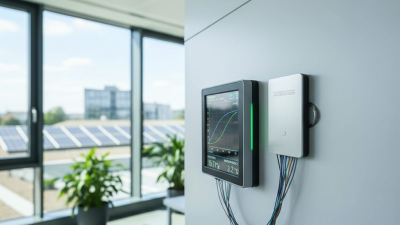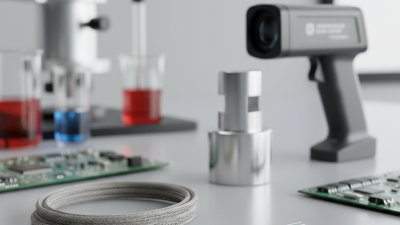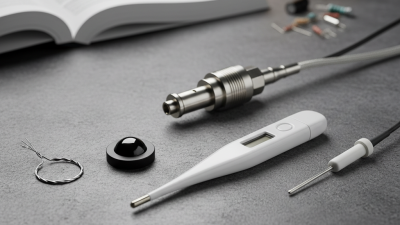









For importers, choosing among China’s top temperature detector suppliers requires more than comparing prices or product photos. A reliable supplier should demonstrate practical manufacturing experience, stable quality control, and clear technical documentation. Product selection must match the application, whether it involves cold-chain transport, food processing, laboratories, HVAC systems, or industrial equipment. Thermocouples, RTDs, infrared sensors, and digital probes each respond differently to heat, moisture, vibration, and installation conditions.
William Thomson, Lord Kelvin, a pioneer of modern measurement science, stated, “When you can measure what you are speaking about, and express it in numbers, you know something about it.” His words remain highly relevant to every temperature detector purchase. A dependable supplier should provide accuracy data, operating ranges, calibration procedures, response-time information, and traceable test records. Ask for samples. Test them under real conditions. Small differences can become serious errors in a storage room, production line, or medical refrigerator.
Supplier evaluation also requires attention to communication and after-sales support. Confirm whether the factory controls key components, performs final inspection, and supports customized connectors, probes, cables, or housings. Certifications may help, but they should not replace independent verification. This is where the process can become less comfortable. A polished catalog does not prove long-term reliability. Even experienced buyers can overlook installation errors, poor cable shielding, or unsuitable sensor placement. This guide examines leading Chinese temperature detector suppliers through product capability, quality evidence, customization options, delivery performance, and importer-focused risk checks.
Temperature detectors measure heat through resistance, voltage, infrared energy, or digital signals. They support cold-chain storage, food processing, laboratories, HVAC systems, and industrial equipment. The device is often small. Its data controls large decisions.
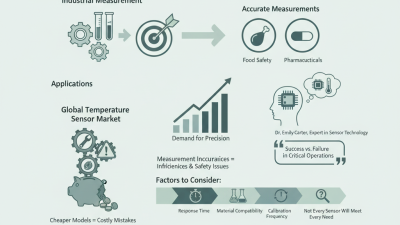
A 2024 Fortune Business Insights report estimates the global temperature sensor market at about USD 7.5 billion in 2023. It also projects strong growth through 2032. This expansion increases supplier choices, but not every supplier offers dependable control. Importers should examine calibration records, measurement ranges, response time, probe materials, and batch testing. ISO 9001 certification can indicate controlled processes, but it does not prove measurement accuracy. Ask for traceable calibration certificates linked to recognized national standards. Request sample units before placing a large order. Test them under real conditions, such as cold storage doors opening repeatedly or moisture near a processing line. Accuracy is not enough. Long-term stability matters.
Tips: Compare at least three suppliers using the same technical specification. Confirm packaging, labeling, lead time, warranty terms, and replacement procedures in writing. A reliable supplier should explain failures clearly, not only promote low prices. Check whether firmware, connectors, and data outputs match your existing equipment. One practical weakness remains: laboratory results may not reflect transport vibration or condensation. Build those conditions into acceptance testing. A careful importer may pay slightly more, yet avoid rejected shipments and unreliable temperature records.
China Top Temperature Detector Suppliers for Importers
Chinese manufacturers offer several temperature detector types for different industrial conditions. Thermocouples suit furnaces, ovens, and fast-changing processes. They tolerate high temperatures and provide quick responses. RTDs deliver stronger accuracy and stability in food, chemical, and laboratory equipment. However, installation quality can affect their readings significantly.
Thermistors work well in compact devices, HVAC controls, and battery systems. Their low cost attracts many importers. Their narrower temperature range requires careful specification. Infrared detectors measure surfaces without contact, which helps monitor moving products or sterile areas. Digital sensors simplify integration with control boards. Wireless probes can reduce wiring around storage rooms, tanks, and production lines.
MarketsandMarkets estimated the global temperature sensors market at about USD 7.5 billion in 2023. It projects the market to reach USD 10.5 billion by 2028. This growth increases the importance of supplier verification. Importers should request calibration records, response-time data, probe-material details, and IP ratings. Ask for samples under actual operating conditions. A detector that performs well in a showroom may drift near steam, vibration, or electrical noise. That mistake is easy to make. Supplier audits should also review batch consistency, traceability, and packaging protection. Standards paperwork helps, but it does not replace testing. Temperature ranges, tolerance classes, cable insulation, and connector design must match the final application.
China Top Temperature Detector Suppliers for Importers
Evaluating temperature detector suppliers requires more than comparing online prices. Ask for product samples, technical drawings, and recent calibration records. Check the sensing range, accuracy tolerance, response time, and operating humidity. A reliable supplier should explain these figures clearly. Vague answers deserve caution. Request a video tour or arrange an independent factory audit. Observe testing equipment, warehouse conditions, and production records. Small details matter, such as labeled components and protected sensor cables.
Test samples under realistic conditions before placing a large order. Compare readings at low, medium, and high temperatures. Record results from repeated measurements. A detector that performs well once may still drift later. Ask whether calibration follows a recognized laboratory process. Confirm available certificates, inspection reports, packaging standards, and traceability documents. Also discuss minimum order quantities, lead times, replacement procedures, and technical support. Written agreements reduce misunderstandings during importing. Still, documents can be outdated. Verify important claims independently.
Tips: Send suppliers a clear specification sheet. Include temperature range, accuracy, probe length, connector type, and installation environment. Ask for a pre-shipment inspection. Keep sample test data for future comparison. Check export packaging with a physical drop test when possible. Do not select the lowest quote automatically. A cheaper detector may create higher costs through inaccurate readings, returns, or production delays. I have found that communication quality is useful evidence. Yet it is not proof of manufacturing capability. Supplier evaluation should remain practical, documented, and open to revision.
Importers evaluating China’s temperature detector suppliers should examine quality systems before comparing prices. A reliable factory can provide ISO 9001 records, material certificates, inspection reports, and traceable calibration data. For thermocouples, ask whether testing follows IEC 60584. For resistance sensors, check alignment with IEC 60751. Certification requirements also depend on the destination market and product application.
Request samples from each shortlisted supplier. Test them at several temperatures, not only at room temperature. Compare response time, measurement deviation, cable durability, and connector stability. CE, RoHS, UKCA, or other declarations may be relevant, but documents should match the exact model. A certificate alone proves little. Supplier audits, batch records, and corrective-action procedures offer stronger evidence.
Customization can include probe length, diameter, sheath material, thread size, cable insulation, connector type, display format, and output signals such as 4–20 mA. Some projects need waterproof housings or high-vibration construction. Provide drawings and operating conditions early. A polished datasheet can still hide practical weaknesses. I have found that small changes in cable routing sometimes affect installation more than sensor accuracy. That detail is easy to miss. Importers should confirm minimum order quantities, sample approval steps, calibration intervals, packaging, and replacement support in writing.arsuarmi
This technical benchmark helps importers compare temperature detector technologies when reviewing supplier quality systems, certification documents, and customization capabilities. The ranges shown are based on commonly referenced IEC specifications and represent typical standardized measurement ranges, not company-specific claims.
Reference framework: IEC 60751 for industrial platinum resistance thermometers and IEC 60584-1 for thermocouples. Actual limits depend on sensor construction, insulation, sheath material, accuracy class, calibration requirements, and application conditions. Importers should request ISO 9001 evidence, applicable product conformity documents, calibration records, material certificates, and customized probe or connector specifications.
China Top Temperature Detector Suppliers for Importers
Ordering, Inspection, Shipping, and Import Considerations
A reliable order starts with a written specification, not a catalogue photo. Define measuring range, accuracy, response time, probe material, ingress protection, calibration interval, and required data format. Ask suppliers for calibration certificates traceable to recognized national or international standards. The ISO Survey 2022 recorded over one million ISO 9001 certificates worldwide, showing why documented quality systems matter. However, certification alone does not prove detector performance.
Request production samples before approving a large shipment. Compare readings against a reference instrument at several fixed points, such as 0°C, 25°C, and 80°C. Check serial numbers, firmware versions, connector fit, display clarity, and battery condition. I once saw packaging pass visual inspection while two probes had unstable readings. Small mistakes become expensive after import. Use a pre-shipment inspection with agreed acceptance limits, sampling levels, photographs, and a signed report.
Shipping conditions deserve equal attention. UNCTAD’s Review of Maritime Transport reports that more than 80% of global merchandise trade by volume moves by sea. Sea freight can expose instruments to humidity, vibration, and long storage periods. Use sealed moisture protection, shock-resistant cartons, and temperature or humidity loggers when the cargo is sensitive. Confirm the commercial invoice, packing list, country-of-origin details, HS classification, and any destination-market conformity documents. Check battery transport requirements early. Incoterms also change responsibility for freight, insurance, customs clearance, and damage claims. The cheapest quotation may not be the lowest landed cost.
| Detector Category | Typical Measurement Range | Common Output or Configuration | Typical MOQ for Export Orders | Typical Production Lead Time | Pre-Shipment Inspection Points | Shipping and Import Considerations |
|---|---|---|---|---|---|---|
| Thermocouple Sensors | -200°C to 1,800°C, depending on the thermocouple type, sheath, and insulation | Type K, J, T, E, N, R, or S; bare wire, probe, mineral-insulated cable, or threaded assembly | Usually 50–500 pieces for standard designs; custom assemblies may require a smaller or larger batch | Approximately 7–20 working days after drawing and specifications are approved | Verify thermocouple type, polarity, wire gauge, sheath material, insertion length, insulation resistance, continuity, and temperature calibration sample results. | Confirm the required HS classification with the customs broker. Protect connectors and probe tips from moisture and bending. Commercial invoice, packing list, bill of lading or air waybill, and certificate of origin may be required. |
| RTD Sensors | Commonly -200°C to 600°C; the actual range depends on the sensing element, cable, and construction | Pt100 or Pt1000; 2-wire, 3-wire, or 4-wire; thin-film or wire-wound element | Often 50–300 pieces for catalog configurations; customized probes are normally quoted separately | Approximately 10–25 working days, including element matching and calibration | Check resistance at 0°C or the agreed reference point, tolerance class, lead-wire configuration, insulation resistance, response time, dimensions, and leak-tightness where applicable. | Use anti-static and moisture-resistant packaging for cable assemblies. Confirm whether the destination market requires electrical safety, material, or conformity documentation for the finished instrument. |
| NTC Thermistors | Generally -80°C to 150°C for common sensing assemblies; specialized designs can differ | Bead, disc, ring, epoxy-coated, glass-encapsulated, or probe type; resistance-temperature curve specified by R25 and B-value | Commonly 100–1,000 pieces because resistance values and cable options are highly configurable | Approximately 7–18 working days for standard materials and 15–30 working days for custom curves | Test resistance at 25°C, B-value or R/T curve, tolerance, insulation, mechanical strength, cable length, connector fit, and response time in the target application. | Protect epoxy-coated and leaded parts against crushing and humidity. Verify tariff treatment and destination-country requirements for products incorporated into appliances or control systems. |
| Infrared Temperature Sensors | Commonly -50°C to 550°C for compact non-contact units; industrial models may cover wider ranges | Analog voltage, current loop, digital interface, relay output, or integrated display; emissivity setting may be required | Often 10–100 pieces, depending on electronics, housing, and communication interface | Approximately 15–35 working days, especially for customized firmware, optics, or enclosures | Verify accuracy, repeatability, field of view, spectral response, emissivity adjustment, ambient operating range, output scaling, alarm function, and calibration certificate. | Check battery status and lithium-battery transport rules if a battery is included. Confirm electromagnetic compatibility and radio approvals when wireless communication is built in. |
| Digital Temperature Probes | Typically -40°C to 125°C for electronic probes; industrial versions may support higher temperatures | Digital bus, USB, serial interface, or integrated transmitter; probe and cable length are specified separately | Usually 20–200 pieces for standard digital probes | Approximately 10–25 working days after interface and firmware requirements are finalized | Confirm communication protocol, address settings, accuracy across operating points, firmware version, connector pinout, cable shielding, and ingress protection. | Use anti-static packaging and separate connectors from sharp metal parts. Determine whether the product is classified as an electronic measuring instrument or as a component for a larger system. |
| Temperature Transmitters | Often -50°C to 200°C at the input for standard assemblies; sensor and transmitter limits must be checked separately | 4–20 mA, 0–10 V, HART-compatible, or digital output; head-mounted, rail-mounted, or integrated design | Usually 10–100 pieces for standard models; programming and enclosure options affect MOQ | Approximately 15–30 working days, including configuration and functional testing | Test input simulation, output accuracy, loop behavior, isolation, power requirements, terminal labeling, configuration data, and enclosure protection rating. | Verify destination voltage, wiring standards, hazardous-area requirements, and applicable EMC or industrial-control regulations before ordering. |
| Industrial Probe Assemblies | Approximately -200°C to 1,100°C, depending on sensor element, thermowell, sheath, and process conditions | Threaded, flanged, sanitary, spring-loaded, bayonet, or thermowell-mounted assemblies | Commonly 10–100 pieces; engineered assemblies are usually approved by drawing rather than catalog code | Approximately 20–45 working days because machining, welding, pressure testing, and calibration may be required | Inspect material certificates, dimensions, thread or flange standard, weld quality, pressure or leak test, surface finish, insertion length, calibration, and marking. | Confirm the applicable pipe, flange, pressure, and sanitary standards in the destination country. Pack long probes in rigid tubes and protect threaded or polished surfaces. |
| Cold-Chain Temperature Loggers | Commonly -30°C to 70°C; freezer, pharmaceutical, and dry-ice applications require specialized specifications | USB or wireless logger with internal or external sensor, downloadable data, alarm limits, and time-stamped records | Often 20–200 pieces, depending on whether the logger is single-use or reusable | Approximately 15–30 working days, including software configuration and calibration | Check calibration points, time accuracy, memory capacity, alarm thresholds, battery life, data export, sensor placement, display readability, and software compatibility. | Determine whether the product contains a lithium battery and follow applicable air-cargo battery rules. For regulated shipments, confirm whether qualification records or validated calibration are required. |