2026 Top Artificial Lift Technologies You Need to Know?
The rise of Artificial Lift Technologies continues to reshape the oil and gas industry. A recent report by the International Energy Agency highlights that Artificial Lift Systems account for approximately 90% of oil production in mature fields. This statistic underlines the critical role these technologies play in optimizing recovery rates.
As we approach 2026, various advancements are emerging within this landscape. The adoption of smart technologies and data analytics is enhancing efficiency and reducing operational costs. Innovations like gas lift systems and electric submersible pumps are evolving, addressing challenges that earlier technologies faced. However, not all developments yield success; some adaptations fall short, revealing the necessity for continuous improvement and strategic implementation.
These technologies are essential, but they aren't foolproof. The complexity of integrating these systems can lead to unforeseen operational hurdles. Companies must navigate this intricate terrain. Understanding the latest technologies will be crucial for organizations aiming to maintain a competitive edge in an ever-evolving market.
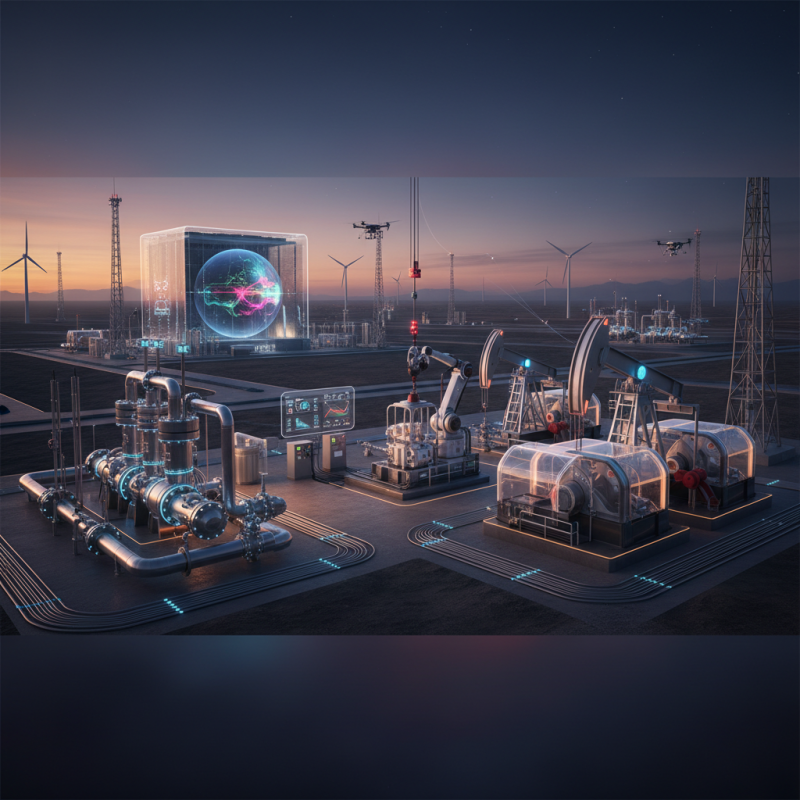
2026 Overview of Artificial Lift Technologies in Oil and Gas Industry
The oil and gas industry is rapidly evolving, and Artificial Lift Technologies are central to this change. These systems enhance production rates in wells that cannot flow naturally. There are several methods available, including electric submersible pumps, gas lift systems, and rod pumps. Each has its strengths, yet none is flawless. For instance, electric submersible pumps often require extensive maintenance, raising operational costs.
Gas lift systems offer flexibility but can be complex to optimize. They rely on gas injection, and inconsistent gas supply can hinder efficiency. Rod pumps are reliable but may struggle in harsh environments. As technology advances, the industry faces challenges in integrating these systems with digital solutions and automation. Striking a balance between traditional methods and new innovations remains a crucial task for operators.
As we look to 2026, the focus will be on improving these technologies. More efficient systems could lead to significant cost savings. However, engineering a perfect solution is unlikely. Each technology presents unique limitations and requires ongoing assessment. Continuous innovation, along with trial and error, will be essential for progress. The path ahead is filled with challenges but also opportunities for better production capabilities.
Emerging Trends: Top Artificial Lift Technologies Transforming Production
The landscape of artificial lift technologies is rapidly evolving. New innovations are emerging, enhancing oil production efficiency. These technologies adapt to different well conditions. For instance, progression with electrical submersible pumps shows promise in harsh environments. They are enhancing their reliability while reducing maintenance needs.
Another noteworthy trend is the incorporation of automation. Smart technologies are tailored to monitor system performance. This allows for timely interventions. However, reliance on automation can lead to unforeseen challenges. What happens when systems fail? Human oversight remains crucial. The balance between automation and manual control is still a work in progress.
Hydraulic lift techniques are also gaining traction. They're ideal for low-pressure wells. This can lead to increased recovery rates. Yet, they require careful management. Over-reliance can cause inefficiencies over time. Exploration of these innovations promises exciting developments. They all hint at a future where production is smarter, but also more complex.
Data-Driven Insights: Efficiency and Performance of Artificial Lift Systems
Artificial lift systems represent a critical component in oil and gas production. A recent industry report indicated that these systems can improve efficiency by up to 30%. The integration of data-driven insights has transformed operational efficiency. Operators increasingly rely on real-time data analytics to maximize production rates and optimize performance.
However, not all artificial lift technologies deliver consistent results. In certain scenarios, the performance gains can fall short of expectations. A study from 2022 revealed a 15% failure rate in conventional lift operations. This raises questions about the reliability of current technologies. Continuous evaluations and adaptations are crucial to ensure optimal use of resources.
The trend towards smart technologies is reshaping the landscape. Advanced sensors and predictive analytics have been shown to reduce downtime significantly. Yet, reliance on technology alone can be a double-edged sword. Systematic issues must be addressed. The success of artificial lift systems depends on a holistic approach that balances technology and human oversight.
Market Analysis: Growth Projections for Artificial Lift Technologies by 2026
Artificial lift technologies play a crucial role in oil and gas production. By 2026, the market for these technologies is projected to see significant growth. Industry analysts predict rising demand as oil prices stabilize and production techniques evolve. Optimizing recovery rates is essential for financial sustainability in this sector.
Tips: Consider positioning artificial lift systems based on specific reservoir needs. Tailor choices to local geology and fluid properties. Not all solutions fit every situation. As technology progresses, failure to adapt could lead to inefficiencies.
Investment in training is critical. Ensure your team understands the latest technologies and best practices. This knowledge can prevent costly mistakes. Monitor performance continuously. Gather data to refine systems over time. Remember, complacency can hinder growth. Embrace change to stay relevant in this competitive landscape.
Case Studies: Successful Implementations of Advanced Artificial Lift Solutions
Artificial lift technologies have transformed the oil and gas industry, enhancing production efficiency and reducing costs. Successful implementation of these systems often highlights their effectiveness. In one case, a field in a remote region used a hybrid artificial lift method. This approach combined gas and electric submersible pumps. Initial challenges included high operational costs and maintenance issues. However, adapting the technology led to a significant increase in oil production.
Another successful implementation occurred in an offshore platform. Here, a specialized rod lift system was introduced. The challenge was the harsh marine environment. Regular corrosion and operational downtime affected production. Continuous monitoring and advanced materials helped mitigate these issues. Over time, the platform's output rose by 30%. It’s compelling to see how innovation can drive success. Yet, companies must remain vigilant. Not all projects achieve desired results immediately. Reflection on past implementations is crucial for ongoing improvement.