







Top 10 Threaded Linear Shaft Manufacturers Worldwide

Threaded Linear Shaft technology sits quietly inside many automated systems. It supports guided movement, repeatable positioning, and controlled load transfer. In 2024, Grand View Research described the broader linear motion market as increasingly driven by robotics, packaging equipment, semiconductor production, and machine tools. MarketsandMarkets also identified factory automation and precision manufacturing as major growth influences. These trends make shaft selection more demanding. Buyers now compare thread accuracy, surface hardness, straightness, corrosion resistance, and delivery stability. A polished shaft may look excellent. It may still fail under poor lubrication or misaligned loading.

Small details matter.

Alexander H. Slocum, a leading precision-engineering author, wrote, “The best design is the simplest one that meets the requirements.” That principle remains useful when evaluating Threaded Linear Shaft manufacturers. A reliable supplier should provide measurable tolerances, material certificates, inspection records, and practical application guidance. Experience matters, but documented evidence matters more. Our ranking examines ten global manufacturers through those criteria. It considers engineering capability, production consistency, customization, quality systems, and customer support. It also recognizes an uncomfortable limitation: published market reports often group threaded shafts with wider linear-motion products. Direct comparisons are therefore imperfect. Still, supplier footprints, technical catalogs, and manufacturing evidence reveal meaningful differences. The strongest companies do not merely sell steel components. They reduce vibration, assembly delays, premature wear, and uncertainty on the factory floor. That is where this global comparison begins.
Top 10 Threaded Linear Shaft Manufacturers Worldwide

What Threaded Linear Shafts Are and How They Function

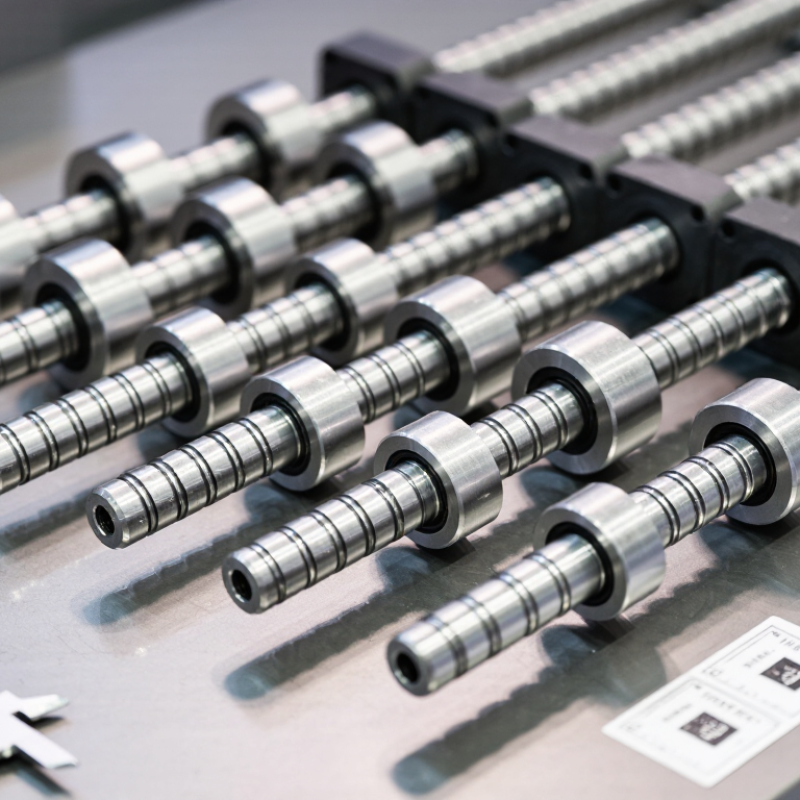
A threaded linear shaft is a round metal rod with a continuous helical thread. It converts rotary motion into controlled linear movement. A nut, carriage, or threaded actuator travels along the shaft when torque is applied. The thread profile, pitch, diameter, and material determine speed, load capacity, accuracy, and wear resistance. Unlike a smooth guide shaft, it both guides and drives the moving component. This compact design suits lifting tables, positioning equipment, packaging machinery, and laboratory devices.

Industry demand reflects this wider automation trend. MarketsandMarkets reported that the global linear motion market could grow from about USD 9.2 billion in 2023 to USD 13.6 billion by 2028. The report links growth to factory automation and precision equipment. Grand View Research has also identified robotics, semiconductor production, and medical equipment as important application areas. These figures do not measure threaded shafts alone. That distinction matters. Shaft performance still depends on lubrication, alignment, nut quality, and operating duty.

Tips: Match the shaft pitch to the required travel speed. Fine threads improve positioning, but they move more slowly. Check the rated load under real conditions, not only catalog values. Keep the shaft clean, aligned, and lightly lubricated. A small installation error can create vibration, heat, and uneven wear. In practice, engineers sometimes choose a stronger shaft than necessary, then discover that the support structure is the weaker part. That is worth reviewing.

Top 10 Threaded Linear Shaft Manufacturers Worldwide - What Threaded Linear Shafts Are and How They Function

Overview: Threaded linear shafts are precision cylindrical shafts with threaded ends or threaded sections used to mount bearings, brackets, collars, couplings, and other linear-motion components. The shaft provides guided, low-deflection travel, while the threads secure the shaft within a machine frame or allow axial adjustment.
Rank Anonymous Manufacturer Profile Common Shaft Material Typical Nominal Diameter Thread Standards Commonly Offered Typical Shaft Tolerance Surface / Hardness Option Primary Function
1 Precision-ground shaft supplier Carbon steel or alloy steel 8–50 mm Metric M6–M30; inch 1/4–1 1/4 in Approximately h6 to h9, depending on diameter Ground finish; optional induction hardening to about 55–62 HRC High-accuracy linear guidance and bearing support
2 Hardened shaft specialist C45 or 4140 alloy steel 10–80 mm Metric coarse threads; UN and UNC options Typical diameter tolerance h6–h8 Induction-hardened raceway; chrome plating may be available Wear-resistant support for recirculating linear bearings
3 Stainless-steel shaft manufacturer AISI 304 or AISI 316 stainless steel 6–40 mm M5–M24; common inch thread equivalents Usually h8–h9 for general-purpose shafts Polished or passivated; corrosion-resistant construction Food-processing, laboratory, cleanroom, and humid environments
4 Chrome-plated shaft supplier Medium-carbon steel with hard chrome plating 12–100 mm Metric M10–M64; selected UN sizes Commonly h7–h9 after finishing Hard chrome layer typically about 20–50 μm; improved corrosion resistance Low-friction guidance in contaminated or moderately corrosive areas
5 Miniature motion-shaft supplier Stainless steel or bearing steel 3–12 mm M2–M10; #2–3/8 in where applicable Typical h6–h9, depending on application Ground or polished surface; optional hardened steel Compact optical equipment, printers, instruments, and small actuators
6 Large-diameter industrial shaft supplier 4140, 4340, or C45 steel 50–200 mm Metric M36–M160; custom coarse threads Generally h8–h11 for heavy-duty designs Heat-treated or nitrided options for high-load service Heavy machinery, structural guides, and high-load linear supports
7 Custom-machined shaft manufacturer Carbon steel, stainless steel, or tool steel 10–150 mm Metric, UN, UNC, UNF, and special-pitch threads Application-specific; commonly h6–h11 Ground, turned, nitrided, plated, or coated Integration into assemblies requiring non-standard lengths or ends
8 Corrosion-resistant motion-shaft supplier 440C stainless steel or precipitation-hardening stainless steel 8–60 mm M6–M36; inch UNF and UNC options Usually h6–h9 Hardened and polished; suitable for washdown-oriented designs Corrosion-sensitive linear mechanisms and outdoor equipment
9 Low-friction coated shaft supplier Alloy steel or stainless steel 10–75 mm M8–M48; UNC and UNF options Typical h7–h9 PTFE-based, electroless nickel, or other engineered coatings Reduced friction, lower maintenance, and improved sliding performance
10 Standard-length shaft manufacturer C45 steel, 1045 steel, or stainless steel 8–60 mm M6–M36; common inch thread sizes Usually h8–h11 Drawn, turned, or ground; plain or zinc-coated ends General machine construction, fixtures, guides, and adjustable supports
Technical note: Actual dimensions, tolerances, hardness, coatings, thread lengths, and permissible loads vary by manufacturer, material grade, shaft diameter, and production standard. The values above represent common industry specifications for threaded linear-shaft configurations and are intended for comparative reference.

Key Criteria for Evaluating Global Manufacturers

When comparing the top ten threaded linear shaft manufacturers, rank alone is weak evidence. The useful question is whether each supplier controls geometry, material quality, and delivery risk. MarketsandMarkets forecasts an 8.8% compound annual growth rate for the linear motion market through 2028. That growth reflects rising automation demand. It also raises the cost of inconsistent shafts.

Evaluate thread accuracy through documented pitch tolerances, surface roughness, straightness, and runout data. Ask for inspection records, calibration dates, and traceable material certificates. ISO 9001 registration helps, but it does not prove shaft performance. The International Federation of Robotics reported 541,302 industrial robot installations worldwide in 2023. These systems punish small alignment errors. A sample shaft should face load testing, not only visual inspection. Shortcuts happen.

Compare heat treatment, corrosion protection, machining capacity, and replacement lead times. A reliable manufacturer explains tolerances clearly and supplies consistent technical drawings. Check packaging too; damaged threads can turn a precise part into scrap. Use total cost, not unit price. Include rejects, downtime, freight, and emergency tooling. MarketsandMarkets data supports strong market momentum, yet forecasts are not guarantees. No scorecard is perfect. Weight verified quality evidence above polished claims, and record every unanswered question before choosing the final ten.

Top 10 Threaded Linear Shaft Manufacturers Worldwide

Top 10 Threaded Linear Shaft Manufacturers Worldwide

The top 10 threaded linear shaft manufacturers worldwide are usually judged by more than production volume. Their real strengths appear in material control, thread accuracy, surface finish, and delivery consistency. Manufacturers serving robotics, packaging, medical equipment, and factory automation often use hardened steel, stainless steel, or precision-ground alloys. Each material suits a different load, speed, and corrosion environment.

Reliable manufacturers inspect shaft diameter, thread pitch, straightness, and hardness at several production stages. They also provide tolerance reports and traceable material records. This matters when a shaft must move smoothly under repeated loads. A small pitch error can create vibration, noise, or premature nut wear. Experienced suppliers understand these details from testing, not only from catalogs. Short lead times help, too.

Still, no ranking is perfect. A supplier strong in large industrial shafts may perform poorly on miniature parts. My assessment could also change after reviewing long-term failure data. Buyers should request samples, dimensional reports, and application references before committing. Ask about coating thickness. Check thread damage after cycling. Confirm packaging quality, because a perfect shaft can arrive bent or scratched. The best manufacturers communicate limitations clearly, rather than promising every specification. That honesty is easy to overlook.

Product Features, Materials, and Manufacturing Capabilities

Top 10 Threaded Linear Shaft Manufacturers Worldwide

The leading threaded linear shaft manufacturers distinguish themselves through measurable accuracy, durable materials, and consistent production control. A reliable shaft should maintain straightness under load, support smooth motion, and resist thread damage during repeated assembly. Surface finish matters. Fine grinding can reduce friction, while carefully rolled threads often improve fatigue resistance compared with sharply cut profiles. Buyers should request tolerance data, runout values, hardness results, and inspection records rather than relying on catalog claims.

Material selection depends on the working environment. Carbon steel suits many general motion systems and offers practical strength at a moderate cost. Stainless steel performs better where moisture, cleaning chemicals, or outdoor exposure are expected. Alloy steel may provide greater load capacity after heat treatment. Common surface options include chrome plating, black oxide, and protective coatings, but each affects dimensional fit. A coating that looks excellent can still cause problems inside a precision nut.

Manufacturing capability separates experienced producers from simple machining shops. Strong suppliers may combine cold drawing, centerless grinding, CNC turning, thread rolling, and controlled heat treatment.

They should also manage custom lengths, end machining, keyways, and small production batches. Quality checks often include optical measurement, hardness testing, and thread-gauge inspection.

No shaft is perfect. Even strong manufacturers can miss a requirement when drawings lack datum references or operating temperatures. Clear technical communication remains part of product quality, not an administrative detail.

How to Compare and Select the Right Manufacturer

Top 10 Threaded Linear Shaft Manufacturers Worldwide

Selecting a threaded linear shaft manufacturer requires more than comparing unit prices. MarketsandMarkets’ 2024 Linear Motion Market report projects growth from about USD 11.7 billion in 2023 to USD 16.8 billion by 2028. This expansion increases supplier choice, but also increases quality variation. Compare shaft material, thread accuracy, straightness, surface hardness, and allowable runout. Ask for inspection records, not only product brochures. ISO 286-1 tolerance references can help engineers judge dimensional consistency. In real projects, a shaft that looks perfect may still bind under side loading. That detail is often missed.

Tips: Request one sample shaft before approving volume orders. Measure thread pitch, diameter, straightness, and surface finish independently. Check whether the manufacturer provides material certificates, batch traceability, and corrective-action reports. ISO 9001 certification can indicate controlled processes, but it does not guarantee perfect parts. Examine the certificate’s scope and expiry date. Shorter lead times may hide limited testing capacity. Faster is not always safer.

Evaluate the manufacturer’s engineering support, machining capability, coating options, packaging, and replacement policy. ASTM A276 may help when stainless-steel grades are specified, while application requirements should determine the final material. Compare total cost, including freight, rework, installation, and downtime. I would also ask for fatigue or load data when shafts operate continuously. My own caution is simple: supplier rankings can guide research, but they cannot replace dimensional inspection. A lower-priced quote may become expensive after one misaligned assembly.