How to Select the Best Thermometer Sensor for Your Needs?
Choosing the right thermometer sensor for your specific needs is crucial. Dr. Jane Thompson, a leading expert in thermal technology, once stated, "Selecting the appropriate thermometer sensor can make or break your project." With multiple options available, understanding these devices is essential.
When selecting a thermometer sensor, consider the application. For instance, different sensors perform well in various environments. A medical thermometer sensor is precisely calibrated for health purposes. Meanwhile, industrial sensors are built to endure harsh conditions. The mismatch can lead to inaccurate readings and costly errors.
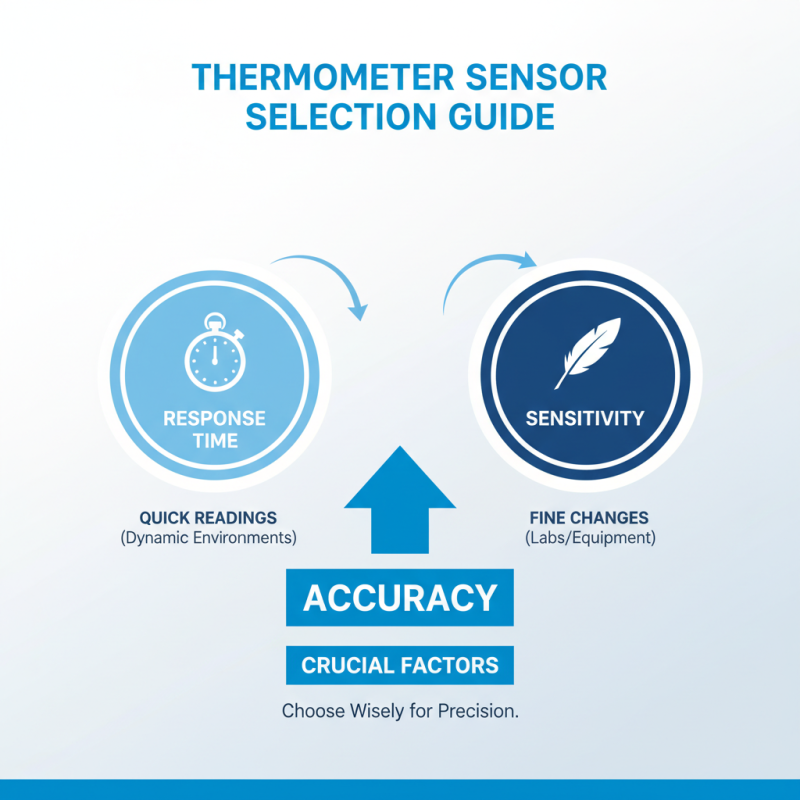
Also, reflect on the sensor's response time and sensitivity. For many projects, a slow response may not be suitable. Sudden temperature changes require quick reactions. Balancing specifications with your application’s needs is vital. There’s no perfect solution; each option has its drawbacks. Ultimately, thorough research is necessary to find a suitable thermometer sensor that fits your project's specific requirements.
Understanding Different Types of Thermometer Sensors Available
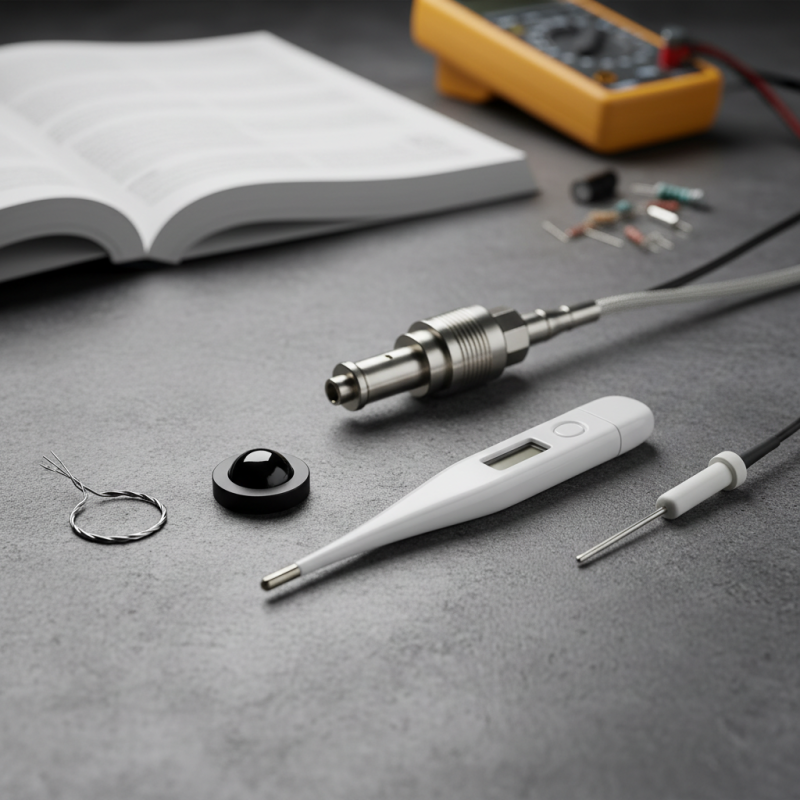
When choosing a thermometer sensor, it’s crucial to understand the types available to meet your specific needs. Thermocouples are popular in industrial applications. They are affordable and can measure temperatures ranging from -200°C to 2000°C. A report from the International Society for Measurement states that over 60% of industrial processes utilize thermocouples. However, their accuracy can fluctuate, making them less ideal for precision-required tasks.
RTDs, or Resistance Temperature Detectors, provide more accuracy and stability. They are frequently used in laboratory settings. RTDs can measure temperatures up to 850°C and have a precision of ±0.1°C. However, they come at a higher cost. A recent market analysis showed that RTDs cover approximately 25% of the temperature sensor market.
Infrared sensors also deserve attention. They measure surface temperatures without contact, which can be useful in hazardous environments. These sensors are generally limited to ranges between -50°C to 1000°C. However, their accuracy can be affected by emissivity variations. It’s essential to consider these factors when selecting a thermometer sensor. Balancing precision, cost, and application needs is vital in making the right choice.
Comparison of Different Types of Thermometer Sensors
Key Factors to Consider When Choosing a Thermometer Sensor
Selecting the right thermometer sensor can be challenging. It’s not just about temperature readings. You need to consider different factors to find the best fit for your needs.
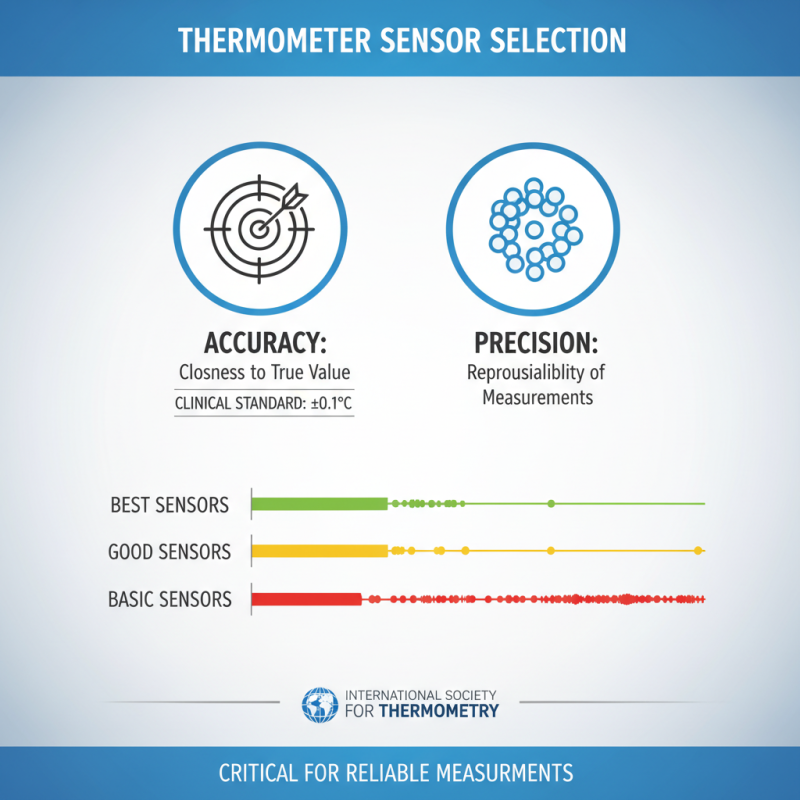
Accuracy is critical. A thermometer should provide reliable readings. Before purchasing, check the sensor’s specifications. Look for a range that suits your requirements. Response time is another key factor. Some applications need quick readings, while others can tolerate a delay. Think about how fast you need the information.
Environment matters too. Will the thermometer be used in extreme conditions? If yes, ensure it can handle the temperature range. Durability is vital for long-term use. Sensors in harsher environments might need extra protection. Finally, consider ease of use. Some sensors require more complex setups. Others are straightforward. Choose what fits your comfort level.
Evaluating Response Time and Sensitivity in Temperature Measurement
Selecting the right thermometer sensor is crucial for accurate temperature measurement. Evaluating response time and sensitivity is essential for this decision. A sensor with a quick response time will give you real-time readings, making it ideal for dynamic environments. Sensors with high sensitivity can detect even the slightest temperature changes. This is vital for applications in laboratories or sensitive equipment.
Tips: Always check the specifications before purchasing a sensor. Response time is often listed, but test it in real-world conditions. You may find the readings differ significantly. If you notice inconsistency, it might indicate that the sensor is too slow for your needs or not sensitive enough.
In some cases, you might face challenges with sensor performance. Delays in response can lead to inaccuracies in critical situations. Over time, a sensor may degrade. Regular testing can ensure reliability. If you find a pattern of variability, it is worth considering a replacement. Pay attention to how sensors perform across different conditions. Factors like humidity and airflow can affect their sensitivity.
Budget Considerations and Long-term Value of Thermometer Sensors
Choosing the right thermometer sensor involves careful consideration of your budget and its long-term value. The market offers a diverse range of sensors, with prices varying significantly according to features. A recent industry report states that high-end models can exceed $200, while basic sensors may be available for under $20. Investing wisely means assessing what you need for your specific applications.
When budgeting, consider not just the purchase price but also maintenance costs. Lower-cost sensors might require frequent replacements or calibration, adding to long-term expenses. You could end up spending more in the long run. According to a study, over 30% of users reported spending more on replacements than they anticipated.
Tip: Create a spreadsheet to compare features and total costs over time. This visual aid helps clarify where you might incur extra expenses.
Choosing a cheaper option may seem wise initially. However, it often leads to performance issues. Ensure reliability by anticipating future needs.
Tip: Research reviews and seek feedback from users in your field. Their insights can save you from costly mistakes. Pay attention to warranties, as they might be good indicators of the sensor's expected lifespan.
How to Select the Best Thermometer Sensor for Your Needs? - Budget Considerations and Long-term Value of Thermometer Sensors
| Sensor Type |
Accuracy (°C) |
Response Time (s) |
Operating Range (°C) |
Cost ($) |
Expected Lifespan (years) |
Long-term Value ($/year) |
| Thermocouple |
±0.5 |
0.1 |
-200 to 1372 |
15 |
10 |
1.5 |
| RTD (Resistance Temperature Detector) |
±0.1 |
0.5 |
-200 to 850 |
30 |
15 |
2.0 |
| Thermistor |
±0.2 |
1.0 |
-50 to 150 |
10 |
5 |
2.0 |
| Infrared Sensor |
±1.0 |
<1.0 |
-50 to 1000 |
100 |
3 |
33.33 |