







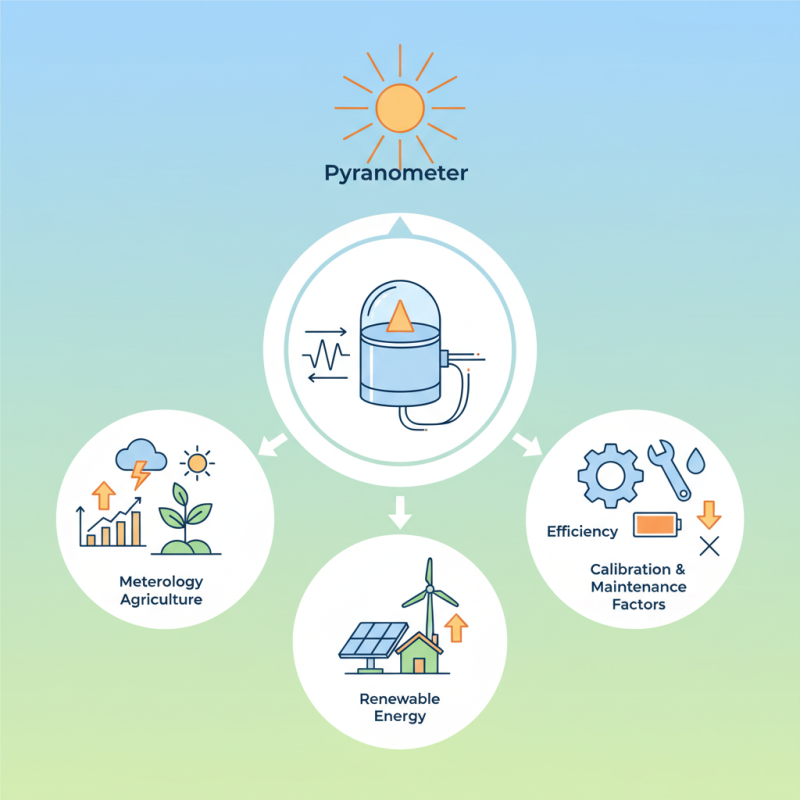
A pyranometer is an essential instrument for measuring solar radiation. It captures sunlight and converts it into an electrical signal. This device plays a vital role in various fields, including meteorology, agriculture, and renewable energy. Understanding how a pyranometer works can enhance its application in these areas.
Solar measurements affect weather predictions and agricultural planning. A pyranometer provides accurate data on solar energy received. This information helps farmers optimize crop growth. Renewable energy sectors utilize pyranometers to assess solar panel efficiency. Accurate readings of solar radiation can lead to better energy production.
Despite its importance, there can be challenges in using a pyranometer. Calibration and maintenance are crucial for reliable data. Environmental factors can also affect readings. Understanding these limitations is essential for effective use. The pyranometer is a remarkable tool, yet it requires careful handling to ensure optimal performance.
A pyranometer is a device used to measure solar radiation. It specifically senses the amount of solar energy received on a flat surface. This instrument plays a crucial role in solar energy research and meteorology. By detecting solar intensity, it can provide valuable data for various applications.
A typical pyranometer contains a sensor. This sensor absorbs sunlight and converts it into an electrical signal. The device is sensitive to changes in light. It can measure both direct sunlight and diffused radiation. However, calibrating a pyranometer can be tricky. Proper calibration is vital for accurate readings. Without it, the data may be misleading.
Moreover, environmental factors can impact measurements. Dust or dirt on the sensor can skew results. Regular maintenance is essential for reliable data. Even slight changes in the sensor’s alignment can affect accuracy. Thus, ensuring optimal positioning and cleanliness is important. Understanding these aspects can lead to more precise solar energy calculations.
Pyranometers play a crucial role in solar energy measurement. These instruments measure solar irradiance, helping to assess the energy potential of solar panels. According to the International Renewable Energy Agency (IRENA), accurate data on solar energy is essential for optimizing solar systems.
The performance of solar energy systems relies heavily on precise measurements. A study by the National Renewable Energy Laboratory (NREL) highlighted that a 10% error in irradiance readings can lead to a corresponding 10% loss in energy production. Pyranometers provide real-time data, allowing for better system management and performance prediction.
Additionally, the rise in solar energy adoption emphasizes the need for accurate data. The Solar Energy Industries Association (SEIA) reported a 20% increase in solar installations last year. Higher accuracy in measurements can aid in making informed decisions about energy investments. However, some pyranometers require regular calibration and maintenance. This can be a challenge, especially in remote areas where access is limited.
The above chart illustrates the monthly average solar radiation measured by a pyranometer throughout the year. Pyranometers are crucial for assessing solar energy potential and optimizing solar panel placement.
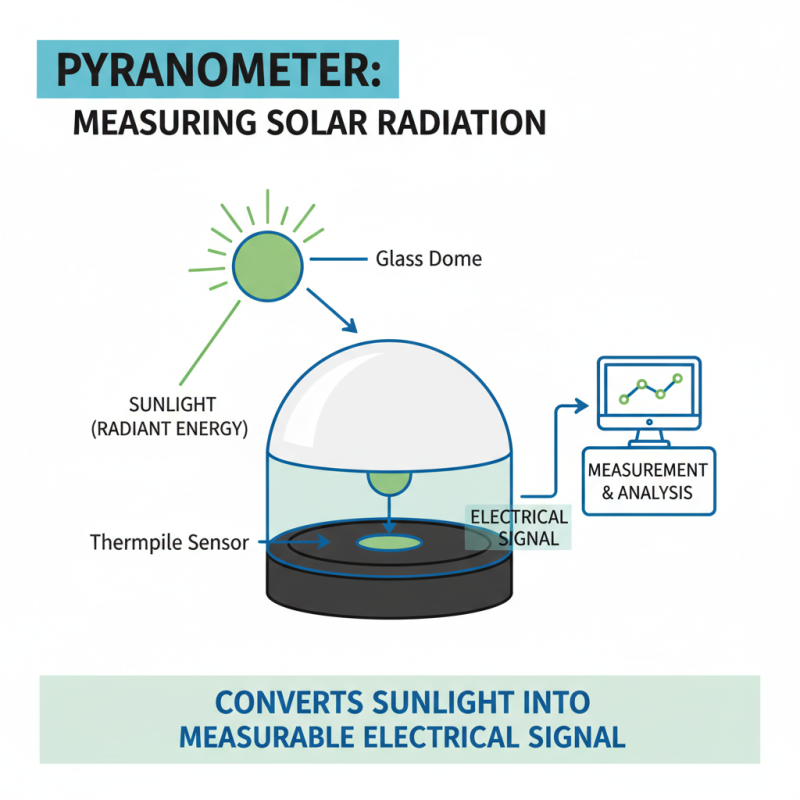
Pyranometers are essential devices for measuring solar radiation. They help scientists and engineers understand how much sunlight reaches the Earth's surface. The science behind pyranometers lies in their ability to convert radiant energy into an electrical signal. This signal can be measured and analyzed.
Pyranometers typically contain a thermopile sensor. This sensor absorbs sunlight and generates heat. The temperature difference between the sensor and a reference surface is crucial. It provides the necessary data for calculating solar energy. Some models also use photodiodes, but thermopiles remain the most common choice.
Tip: Ensure you maintain your pyranometer regularly. Dust and debris can affect readings significantly. Even slight obstructions can lead to incorrect data.
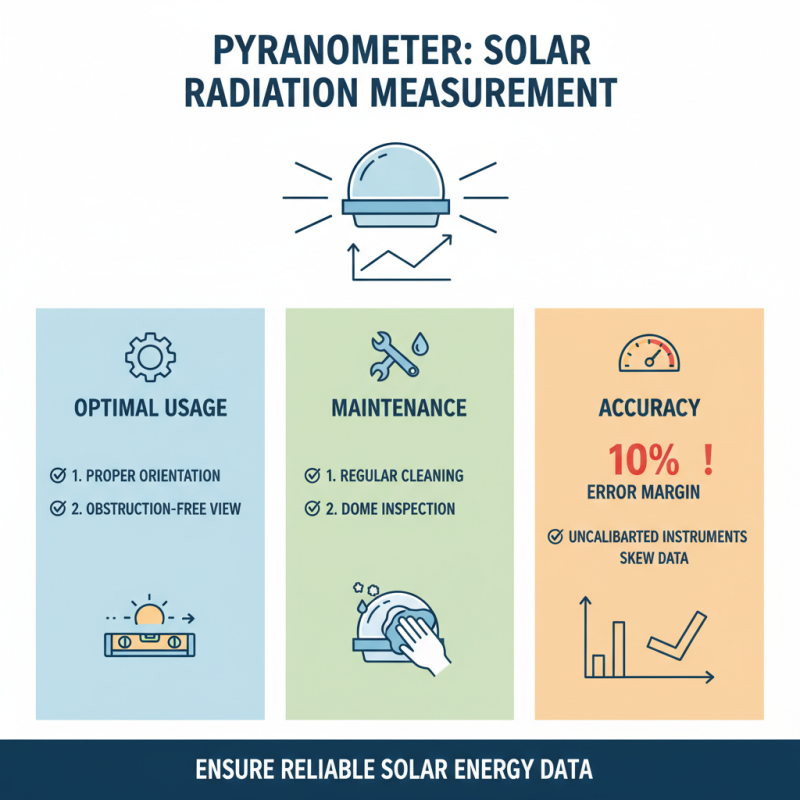
When using a pyranometer, the orientation is vital. A misaligned device can yield unreliable results. Positioning it correctly will maximize accuracy in your measurements.
Tip: Take time to familiarize yourself with the device’s manual. Each model might have features worth exploring. Understanding these can improve your readings and overall experience.
Pyranometers are crucial instruments for measuring solar radiation. They come in different types, each with unique features and applications. The most common types are thermopile pyranometers and silicon-cell pyranometers.
Thermopile pyranometers offer high accuracy and sensitivity. These devices use a series of thermocouples to measure temperature changes caused by solar radiation. They are often used in research settings and for monitoring solar energy systems. However, they can be more expensive and require careful calibration.
Silicon-cell pyranometers, on the other hand, are less sensitive and more affordable. They use photovoltaic cells to convert solar light into electrical energy. While they are suitable for general applications, their measurements can be affected by temperature variations. Choosing the right type is critical for specific applications. Each type has its benefits and shortcomings, making it essential to assess individual needs before making a decision. The impact of these tools can vary widely based on the intended use.
| Pyranometer Type | Measurement Principle | Applications | Accuracy |
|---|---|---|---|
| Thermopile Pyranometer | Measures temperature differential | Solar radiation studies, meteorology | ±5% |
| Photovoltaic Pyranometer | Converts solar energy into electrical energy | Solar panel efficiency testing | ±10% |
| Cavity Pyranometer | Measures radiation by detecting reflected light | Research, environmental monitoring | ±2% |
| Silicon Pyranometer | Uses silicon diodes to measure light | Agricultural applications, solar energy systems | ±8% |
Pyranometers are essential instruments for measuring solar radiation. Proper usage and maintenance are critical for accurate results. Understanding how to operate them correctly ensures high-quality data. Regular calibration is a must. Reports indicate that uncalibrated instruments can have an error margin of up to 10%. This level of inaccuracy can skew data in solar energy assessments.
Cleaning the sensor dome is another vital task. Dust and debris can affect readings significantly. In fact, studies show that unclean sensors can reduce sensitivity by around 15%. Regularly check for obstructions. Regular maintenance protocols should include inspection schedules. Look for physical damage or corrosion. Such issues can arise even in new devices.
Battery replacement is often overlooked. If devices are battery-operated, ensure to monitor the power levels often. A low battery can disrupt data collection. This sometimes leads to incomplete or missing data records. Review data logs regularly for inconsistencies. This practice can uncover unnoticed errors. Engaging in these best practices leads to more reliable performance.