








China’s thermal management market is expanding across electronics, batteries, power devices, aerospace, and advanced manufacturing. Accurate thermal conductivity measurement now supports safer designs, tighter process control, and more credible material comparisons. This guide introduces ten leading Chinese suppliers serving laboratories, universities, manufacturers, and research centers.
The selection considers instrument range, measurement principles, temperature capability, calibration practice, software, technical support, and application experience. Suppliers may offer guarded hot plate, heat flow meter, laser flash, transient plane source, or thermoreflectance systems. Each method answers different questions. Dense insulation, thin films, ceramics, polymers, and liquid samples require different testing strategies. A polished instrument does not guarantee a reliable result. Sample preparation, contact resistance, surface flatness, density, and environmental stability can change the final number.
Professor David G. Cahill, a widely recognized authority in nanoscale thermal transport, has emphasized: “Thermal conductivity is not simply a material constant; it depends on how and where it is measured.” That warning remains practical. A battery engineer may need repeatable through-plane data, while a semiconductor researcher may need localized in-plane measurements. The best supplier depends on the question.
This review focuses on measurable capabilities rather than impressive claims. It examines product details, service responsiveness, published applications, and possible limitations. No ranking is perfectly universal. Some information may change as suppliers update instruments or expand overseas support. Readers should verify specifications, calibration certificates, sample limits, and after-sales terms before purchasing. Small details matter. A missing adapter can delay an entire week of testing.
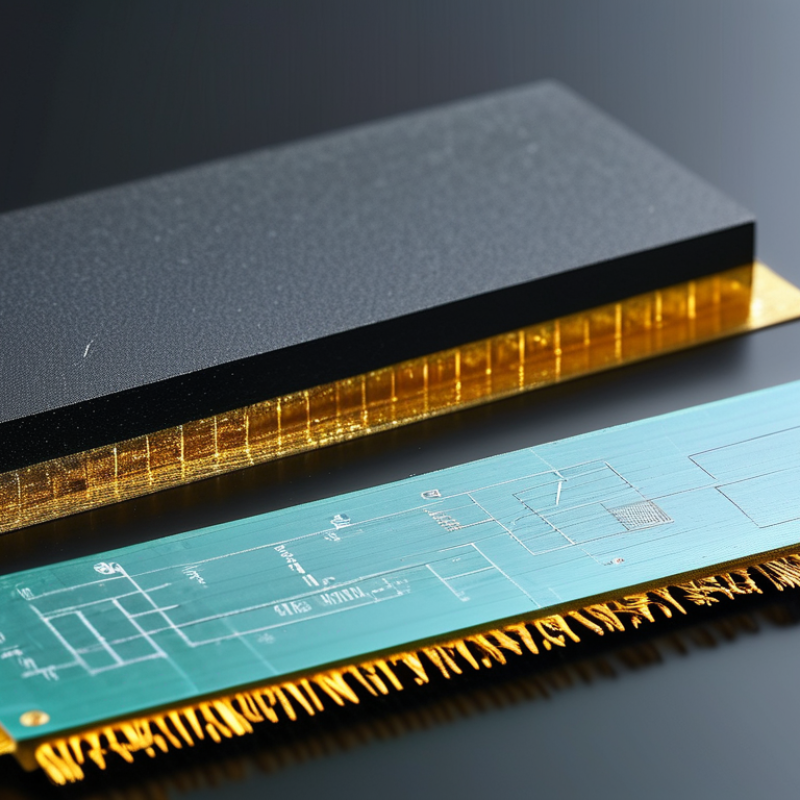
Thermal conductivity measurement supports material development, quality control, and energy-saving design in China. The basic principle is simple: heat moves through a specimen under a controlled temperature difference. The instrument measures heat flow, temperature, and specimen thickness. These values produce thermal conductivity, usually reported in W/m·K. The result seems clear, but small errors can change decisions.
Steady-state methods suit insulation boards, ceramics, and dense solids. Transient methods work faster with powders, liquids, and small samples. Laser-based techniques can evaluate high-temperature materials, while guarded heat flow methods offer practical laboratory control.
In China, reliable suppliers should provide calibration records, traceable standards, clear software, and technical training. Environmental control also matters. Humidity, contact pressure, and surface flatness can affect results. I have seen a clean-looking test fail because the sample edges leaked heat.
Tips: Match the method to the material before comparing suppliers. Check the usable temperature range, sample size, uncertainty, and maintenance support. Test a reference material regularly. Do not trust one reading. Repeat it under stable conditions, and record every preparation step. This may feel slow, but it exposes weak assumptions. Some materials are anisotropic, so measure both directions when heat flow changes with orientation. A supplier’s published specification is useful, yet independent verification remains necessary.
China’s top thermal conductivity measurement suppliers are evaluated through evidence, not advertising. The comparison begins with method coverage, including guarded hot plate, laser flash, and transient plane source testing. Each method suits different materials and temperature ranges. A serious supplier explains these limits clearly.
Laboratory experience matters. Reviewers examine calibration records, certified reference materials, sample preparation, and operator training. They also compare repeatability across several test runs. A result should include measurement uncertainty, specimen dimensions, density, temperature, and test atmosphere. Missing details weaken confidence. Numbers can mislead.
The comparison also considers equipment condition and data integrity. A modern instrument is useful, but controlled procedures matter more. Suppliers are checked for traceable calibration, documented quality systems, and technically qualified staff. Independent accreditation can strengthen authority, though it does not guarantee every result is suitable for every application.
Practical service affects the final ranking. Reviewers may assess quotation clarity, lead time, technical communication, and how returned samples are handled. A supplier that explains an abnormal reading shows stronger professional judgment than one that hides it. That matters.
No ranking is perfect. Published case evidence may be limited, and some suppliers present stronger documentation than actual testing consistency. Buyers should request sample reports, uncertainty budgets, and method-specific validation before making a decision. Comparing the same material under identical conditions remains the fairest test.
China Top 10 Thermal Conductivity Measurement Suppliers
Leading Chinese suppliers generally cover five product categories: guarded hot plate systems, heat flow meters, transient plane source instruments, laser flash analyzers, and calibration accessories. Each category serves different materials. Guarded hot plate systems suit insulation boards and low-conductivity samples. Heat flow meters support faster routine testing. Transient plane source instruments handle powders, liquids, polymers, and anisotropic materials. Laser flash analyzers target metals, ceramics, graphite, and high-conductivity solids.
Technical capability matters more than catalog size. ASTM C177 and ASTM C518 guide steady-state testing, while ISO 22007-2 supports transient methods and ASTM E1461 covers laser flash analysis. Many advanced systems offer programmable temperature control from room temperature to above 1,000°C, depending on configuration. Reported measurement uncertainty commonly ranges from 2% to 5% under controlled conditions. Sample thickness, surface flatness, contact resistance, and calibration drift can change the result.
The IEA’s Energy Efficiency 2023 report states that buildings consume about 30% of global final energy. This keeps insulation testing commercially important. Reliable suppliers should provide traceable calibration, reference materials, software records, and technical support for method selection. A neat specification can still hide a weak test plan. I would verify repeatability with a known reference sample before comparing suppliers. That step is often skipped. Some systems also claim broad material compatibility, but liquids, porous boards, and layered composites require different fixtures and corrections.
| Profile | Primary Product Categories | Main Measurement Methods | Typical Temperature Capability | Suitable Sample Forms | Typical Conductivity Range | Key Technical Capabilities | Common Applications | Relevant Standards or References |
|---|---|---|---|---|---|---|---|---|
| Supplier Profile 01 | Guarded hot plate systems; thermal resistance testers | Steady-state guarded hot plate | Ambient to approximately 250 °C, depending on configuration | Rigid boards, insulation panels, foams, and bulk specimens | Approximately 0.01–2 W/(m·K) | Two-sided heat-flow control, guarded metering area, programmable temperature stabilization, and thermal-resistance calculation | Building insulation, refractory insulation, and polymer foam development | ASTM C177; ISO 8302; related national equivalents |
| Supplier Profile 02 | Heat-flow meter instruments; insulation quality-control systems | Heat-flow meter method | Ambient to approximately 80 °C for standard laboratory configurations | Flat homogeneous specimens and insulation boards | Approximately 0.02–1.5 W/(m·K) | Reference-material calibration, rapid repeat testing, automatic thickness input, and thermal-resistance reporting | Construction-material production lines, incoming inspection, and laboratory testing | ASTM C518; ISO 8301; GB/T 10295 |
| Supplier Profile 03 | Laser or light-flash thermal diffusivity systems | Laser flash method with density and heat-capacity conversion | Room temperature to approximately 1,000 °C, subject to furnace design | Discs, pellets, coatings, ceramics, metals, and graphite-based materials | Approximately 0.1–2,000 W/(m·K), calculated from diffusivity | Short-pulse heating, infrared detection, multilayer correction, and high-temperature atmosphere control | Ceramics, electronic packaging, thermal interface materials, and energy materials | ASTM E1461; ISO 18755; ASTM E2585 |
| Supplier Profile 04 | Transient hot-wire analyzers; liquids and powders testing systems | Transient hot-wire and transient line-source methods | Ambient conditions to approximately 150 °C, depending on cell materials | Liquids, pastes, slurries, powders, and granular materials | Approximately 0.02–5 W/(m·K) | Short measurement cycles, convection-reduced probe design, viscosity compensation, and disposable or reusable sensors | Coolants, battery slurries, thermal pastes, oils, and research suspensions | ASTM D7896; ISO 22007-2; related transient-method guidance |
| Supplier Profile 05 | Transient plane source instruments; solid-material screening systems | Transient plane source method | Approximately 0–300 °C for common laboratory setups | Solids, composites, foams, rubbers, and small irregular specimens | Approximately 0.01–100 W/(m·K) | Double-sided sensor options, anisotropy evaluation, small-sample testing, and automatic curve fitting | Composite materials, polymers, geological samples, and insulation research | ISO 22007-2; ISO 22007-4; applicable laboratory procedures |
| Supplier Profile 06 | Comparative thermal-conductivity analyzers; thin-film and interface testers | Comparative steady-state and guarded-comparative methods | Ambient to approximately 200 °C | Thin sheets, thermal pads, films, laminates, and interface layers | Approximately 0.05–20 W/(m·K) | Controlled contact pressure, interface resistance separation, reference-sample comparison, and thickness correction | Power electronics, LED packaging, heat spreaders, and thermal interface materials | ASTM D5470; ASTM E1530; ISO 22007-1 |
| Supplier Profile 07 | High-temperature thermal-property systems; refractory testing equipment | Laser flash, hot-wire, and comparative high-temperature methods | Ambient to approximately 1,600 °C, subject to atmosphere and furnace configuration | Refractories, graphite, ceramics, carbon materials, and metallic specimens | Approximately 0.5–500 W/(m·K) | Inert or vacuum atmosphere, programmable heating profiles, oxidation protection, and thermal-diffusivity analysis | Kiln materials, aerospace ceramics, furnace components, and carbon products | ASTM E1461; ISO 18755; relevant refractory test procedures |
| Supplier Profile 08 | Thermal conductivity meters for powders, granular media, and bulk insulation | Hot-wire, hot-disk, and controlled bulk-density methods | Ambient to approximately 100 °C | Powders, beads, fibers, granular fill, and loose insulation | Approximately 0.01–2 W/(m·K) | Adjustable compaction, bulk-density control, moisture-condition recording, and repeatability monitoring | Insulation fillers, aerogel granules, mineral fibers, and powder processing | ASTM C518; ISO 22007-2; material-specific laboratory procedures |
| Supplier Profile 09 | Thermal interface material characterization systems | Steady-state thermal resistance and heat-flow methods | Ambient to approximately 150 °C | Greases, phase-change materials, pads, gels, tapes, and thin films | Approximately 0.2–20 W/(m·K); contact resistance is also reported | Controlled bond-line thickness, compression-load control, surface-flatness verification, and thermal impedance analysis | Semiconductor packages, battery modules, power modules, and cooling assemblies | ASTM D5470; ASTM E1530; IEC-related thermal-interface procedures |
| Supplier Profile 10 | Custom thermal-property test platforms; integrated laboratory systems | Configurable combination of steady-state and transient techniques | Ambient to approximately 1,200 °C, based on the selected test module | Custom fixtures for solids, coatings, composites, liquids, and small specimens | Approximately 0.01–500 W/(m·K), method dependent | Multi-method integration, automated data acquisition, temperature and atmosphere control, fixture design, and laboratory software connectivity | University research, industrial R&D, failure analysis, and third-party testing laboratories | ASTM C177; ASTM C518; ASTM D5470; ASTM E1461; ISO 8301; ISO 18755 |
Note: The capability ranges shown are representative ranges for commonly available laboratory configurations in China. Actual performance depends on instrument configuration, calibration materials, specimen properties, test conditions, and the applicable standard.
Thermal conductivity testing supports building materials, battery packs, insulation, ceramics, and electronic components. The International Energy Agency reported in 2023 that buildings consumed about 30% of global final energy. This figure strengthens demand for reliable insulation measurements. Battery and electronics laboratories also need precise heat-flow data. A small measurement error can affect thermal design, safety margins, and product certification.
Selection should match the material and temperature range. Guarded hot plate methods suit insulation boards, while heat-flow meters offer faster routine testing. Laser flash analysis works better for dense solids and high-temperature components. ASTM C177, ASTM C518, ISO 8301, and ISO 22007 provide useful method references. Check repeatability, sample dimensions, atmosphere control, calibration traceability, and software records. Suppliers should explain uncertainty, not only advertise resolution. NIST guidance on measurement assurance also supports documented calibration and uncertainty evaluation. However, one method rarely fits every application.
Tips: Request test data using your actual sample type. Compare three repeated measurements. Ask how edge losses are controlled. Inspect calibration certificates and service response times. A low purchase price may hide costly fixtures, training, or recalibration. Do not trust a perfect specification sheet without independent verification.
China’s top ten thermal conductivity measurement suppliers are increasingly judged by quality systems, not price alone. Reliable laboratories should follow ISO 8302 for guarded hot plate testing and ASTM C518 for heat-flow measurements. These methods improve repeatability across insulation, polymers, ceramics, and electronic materials.
Service coverage now includes calibration, sample preparation, on-site testing, and technical training. A serious supplier should provide traceable calibration records and uncertainty budgets. Small details matter: sample thickness, surface flatness, moisture, and contact pressure can change results. ASTM E1461 supports laser-flash analysis for high-temperature materials, but operator skill remains critical. The market is not perfectly transparent. Some published specifications appear stronger than daily testing evidence.
Future demand is tied to batteries, power electronics, and data centers. The International Energy Agency reported that data-center electricity use reached about 415 TWh in 2024 and may more than double by 2030. MarketsandMarkets has also projected strong growth in thermal interface materials through 2030. These trends will push suppliers toward faster testing, wider temperature ranges, and automated reporting. Remote support is useful, but it cannot replace a stable calibration process. One practical concern remains: suppliers may expand equipment faster than their technical teams. Buyers should inspect proficiency-testing results, service response times, and data retention policies before approving a supplier.