






China Best Soil Temperature Probe Supplier?

Choosing the China best soil temperature probe supplier requires more than comparing prices or browsing product photographs. The right partner should understand real field conditions, from greenhouse benches to deeply buried agricultural sensors. A reliable soil temperature probe must deliver stable readings through moisture, compacted soil, fertilizer exposure, and seasonal temperature changes. Probe length, sensing range, cable protection, and connector quality all matter. Small details matter.

Experienced buyers should ask how each probe is calibrated. They should request accuracy data, testing records, and clear operating instructions. A supplier with technical knowledge can explain whether an RTD, thermistor, or digital sensor suits the application. They should also discuss installation depth, response time, data logger compatibility, and maintenance needs. Check the enclosure rating. Confirm the cable material. Ask about replacement support.

A dependable Chinese manufacturer should provide traceable quality procedures, responsive communication, and practical customization options. Certifications can support credibility, but they do not replace independent verification. Testing one sample in your own soil is wise. Laboratory performance may differ from field performance. No supplier is perfect. A catalogue can hide weaknesses.

This guide examines how to identify a capable soil temperature probe supplier in China. It considers product accuracy, manufacturing experience, quality control, export support, and after-sales service. The goal is not to promote the lowest quotation. It is to help buyers choose equipment that produces trustworthy data over time, under real working conditions.
China Best Soil Temperature Probe Supplier?

What Is a Soil Temperature Probe?

China Best Soil Temperature Probe Supplier?

What Is a Soil Temperature Probe?

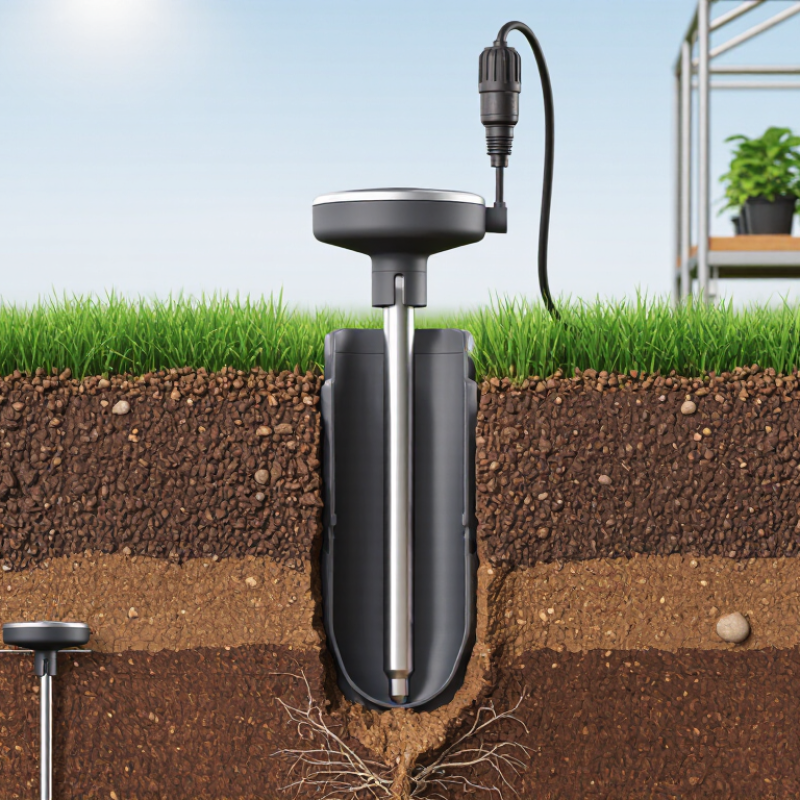
A soil temperature probe is a sensor designed to measure heat below the ground surface. It records temperature around seeds, roots, and irrigation zones. Unlike an air thermometer, it must handle moisture, soil pressure, and changing burial depths.

Depth matters. A reading at 5 centimeters can differ sharply from one at 20 centimeters.

The USDA Soil Taxonomy, 13th edition, classifies soil-temperature regimes using defined ranges. Mesic soils generally measure 8–15°C, while thermic soils range from 15–22°C. These figures help agronomists interpret germination and root activity.

The USDA Natural Resources Conservation Service also recommends consistent sampling depths for comparable field observations. Small placement errors can distort results.

The WMO Guide to Instruments and Methods of Observation lists common soil-temperature depths, including 5, 10, 20, 50, and 100 centimeters.

A dependable probe should offer stable calibration, corrosion-resistant materials, and traceable testing records.

Calibration matters too. Field teams should compare readings with a certified reference thermometer before large-scale deployment.

Do not guess.

A reliable China-based supplier should explain response time, accuracy, waterproof protection, cable length, and data-output options clearly.

Even a good sensor can mislead when soil texture, shade, or poor contact is ignored.

How Soil Temperature Probes Work

China Best Soil Temperature Probe Supplier?

How Soil Temperature Probes Work

A soil temperature probe converts heat into an electrical signal. Most modern probes use a thermistor, whose resistance changes as temperature changes. A small data logger reads that resistance and applies calibration coefficients. The result appears in degrees Celsius or Fahrenheit.

Placement matters greatly. A sensor touching a stone can report a false local temperature. Loose contact creates another error. Install the sensing tip at a measured depth, then press soil firmly around it. The USDA NRCS Soil Climate Analysis Network commonly records temperatures at 5, 10, 20, 50, and 100 centimeters. These layers reveal how slowly heat moves downward. The 5-centimeter layer may change quickly after rain or sunlight.

A probe does not measure “the soil” as one fixed condition. It measures a small thermal zone. NOAA’s 2023 State of the Climate report recorded global surface temperature at 1.18°C above the twentieth-century average. That trend makes consistent depth, shielding, and calibration more important. Field checks with a certified reference thermometer can expose drift. Still, even careful installations have limits. Wet clay, mulch, roots, and air gaps can distort readings. A useful supplier should provide calibration data, response time, operating depth, and protective specifications, not only a low price. In practice, reliable measurements begin with installation discipline.

Key Features of Reliable Soil Temperature Probes

China Best Soil Temperature Probe Supplier?

Reliable soil temperature probes need more than a low accuracy number. They require stable calibration, fast response, and strong protection against moisture. The USDA NRCS SCAN network measures soil temperature at depths from 5 to 100 centimeters. This supports multi-depth monitoring for germination, irrigation, and frost decisions. A suitable probe should match those practical depths. It should also provide accuracy near ±0.2°C, low drift, and a documented calibration method. WMO No. 8 stresses traceable measurement procedures and regular instrument checks. That matters in wet clay, sandy fields, and greenhouses.

Look for stainless-steel sensing tips, sealed cable joints, and an IP-rated housing. A probe should survive repeated insertion without bending. Its response time also matters after rain or sudden cold. Digital output can reduce signal loss across long cables. Yet specifications can mislead. A claimed ±0.1°C result may apply only in controlled laboratory conditions. Field temperature gradients are less forgiving. I would request calibration records, operating temperature limits, and sample data before choosing a supplier.

Tips: Compare readings from two probes at the same depth. Check them in shaded soil and direct sun. Record differences for seven days. Small deviations reveal installation problems. Avoid pressing soil too tightly around the sensor. That mistake changes heat transfer. Reliable suppliers should explain testing, replacement support, and data compatibility clearly. Certification helps, but it does not replace field evidence.

China Best Soil Temperature Probe Supplier? - Key Features of Reliable Soil Temperature Probes
Evaluation Dimension Reliable Probe Specification or Benchmark Typical Data or Requirement Why It Matters for Supplier Selection
Measurement Range At least −40 °C to +80 °C for general outdoor and agricultural use Wider ranges may be required for frozen-soil studies, composting, industrial processes, or laboratory testing. A suitable range prevents sensor damage and ensures the probe can operate across seasonal and site-specific temperature conditions.
Accuracy About ±0.2 °C to ±0.5 °C in the specified operating range Accuracy should be stated together with the temperature range, calibration conditions, and measurement method. Accurate readings support irrigation planning, seed germination analysis, frost monitoring, and soil research.
Resolution 0.1 °C or better Resolution describes the smallest displayed or reported temperature increment; it is not the same as accuracy. Higher resolution helps identify gradual changes in soil temperature, provided the sensor has adequate accuracy and stability.
Response Time Typically less than 30 seconds in well-coupled soil conditions Response time depends on probe diameter, encapsulation, soil contact, moisture, and the required settling criterion. Shorter response times are useful for field measurements, mobile sampling, and systems that require frequent updates.
Sensor Technology RTD, thermistor, or digital temperature sensor RTDs generally provide stable, repeatable measurements; thermistors offer high sensitivity; digital sensors can simplify signal transmission. The sensor type should match the required accuracy, cable length, interface, operating environment, and controller compatibility.
Probe Construction Sealed stainless-steel or corrosion-resistant metal probe body Common probe diameters are approximately 4 mm to 12 mm, depending on mechanical strength and installation requirements. Durable construction improves insertion performance, protects the sensing element, and supports repeated field deployment.
Moisture and Dust Protection At least IP65 for protected outdoor installations; IP67 or higher for wet or buried applications IP67 generally indicates protection against dust ingress and temporary immersion under defined test conditions. Appropriate ingress protection reduces failures caused by irrigation, rainfall, condensation, and prolonged soil contact.
Cable and Connector UV-resistant cable with sealed cable exit and application-appropriate connector Cable lengths commonly range from 1 m to 10 m, while longer installations may require signal conditioning or communication modules. Reliable cable sealing and strain relief help prevent moisture ingress, conductor damage, and unstable readings.
Output Interface Analog output, resistance output, SDI-12, RS-485, or another documented interface The interface must match the data logger, weather station, PLC, irrigation controller, or monitoring platform. Clear wiring diagrams, communication parameters, and output scaling reduce integration time and commissioning errors.
Calibration Documentation Traceable calibration record or inspection report for each production batch or instrument Documentation should identify test points, reference equipment, uncertainty or tolerance, and calibration date. Calibration evidence supports quality control, research reproducibility, and verification of measurement performance.
Long-Term Stability Low drift with consistent readings during extended outdoor exposure Stability depends on sensor quality, sealing, cable design, thermal cycling, chemical exposure, and installation conditions. A stable probe lowers recalibration frequency and improves confidence in long-term soil monitoring data.
Installation Method Designed for insertion at the required soil depth without damaging the probe or cable Installation depth may range from a few centimeters for seed-zone monitoring to deeper placements for soil-profile studies. Correct installation and good soil contact are essential for representative readings and repeatable measurements.
Operating Environment Suitable for agricultural soil, greenhouse beds, environmental monitoring, or laboratory use Confirm compatibility with soil moisture, salinity, fertilizer exposure, freeze-thaw cycles, and burial duration. Environmental compatibility helps prevent corrosion, insulation breakdown, and inaccurate measurements.
Customization Capability Configurable probe length, cable length, connector, output signal, and calibration points Customization should be supported by a written technical specification and sample approval process. Flexible configuration allows the probe to fit existing monitoring systems and site-specific installation constraints.
Quality Verification Incoming-material inspection, production testing, leak testing, and final functional verification Ask for test procedures, acceptance criteria, sample reports, and batch traceability records. A documented quality process is a stronger indicator of consistency than appearance or a low purchase price alone.
Technical Support Clear datasheet, wiring diagram, installation instructions, and response-time commitment Support should cover sensor selection, interface configuration, installation, troubleshooting, and replacement procedures. Accessible technical support reduces deployment delays and improves the reliability of the complete monitoring system.

How to Evaluate Chinese Soil Temperature Probe Suppliers

How to Evaluate Chinese Soil Temperature Probe Suppliers

Choosing a reliable Chinese soil temperature probe supplier requires more than comparing online prices. Start with the probe’s measurement range, accuracy, response time, and sensing depth. A supplier should provide calibration records, technical drawings, and clear test conditions. Ask whether calibration is traceable to recognized national or international standards. Vague certificates deserve closer attention.

Request samples before placing a large order. Test them in different soil textures, moisture levels, and outdoor temperatures. Check whether the cable remains flexible after repeated bending. Examine the probe seal after rain exposure. An IP rating is useful, but actual construction details matter more. Also review the housing material, connector design, and resistance to corrosion. Small weaknesses often appear during installation, not in a product photo.

Reliable suppliers explain quality control without avoiding difficult questions. They should describe batch testing, sensor matching, production records, and replacement procedures. Confirm lead times, minimum order quantities, packaging, and technical support in writing. Communication quality is evidence too. Clear answers usually reduce later errors. Still, no supplier is perfect. I would not judge one successful sample as final proof. Soil conditions vary widely, and even accurate probes can produce misleading readings when installed poorly. A careful buyer should record test results, compare repeated measurements, and reassess the supplier after delivery. That extra review may feel slow, but it protects long-term field data.

Applications and Selection Criteria for Soil Temperature Probes

Selecting a soil temperature probe starts with the application, not the catalogue. Crop emergence, irrigation control, frost alerts, compost monitoring, and greenhouse automation require different response times and installation depths. USDA NRCS SCAN stations commonly measure soil temperature at 5, 10, 20, 50, and 100 centimeters. This depth range shows why one probe rarely fits every field.

Shallow sensors react quickly to sunlight and air changes. Deeper sensors provide steadier readings for root-zone studies and seasonal modelling. Choose a probe with a documented accuracy range, suitable cable protection, and stable calibration. The World Meteorological Organization recommends traceable observations and consistent maintenance for climate-related monitoring. That matters near irrigation lines, where wet soil can cool faster than surrounding ground.

Field conditions are rarely clean. Roots grow around sensors. Rodents damage cables. A probe can still lie. During testing, compare readings with a calibrated reference thermometer and record the soil depth, moisture, and installation angle. FAO soil management reports repeatedly connect reliable soil information with better water and nutrient decisions. Still, accuracy claims need context. A laboratory specification may not survive compacted clay, standing water, or long-term burial. For exposed sites, select UV-resistant housing and an IP-rated enclosure. For automated systems, confirm signal type, logging interval, and operating temperature before purchase. Cheap probes may reduce initial cost, but replacement labor is often overlooked.

Soil Temperature Probe Applications and Selection Criteria

Soil temperature probes support planting decisions, germination monitoring, irrigation research, compost management, and environmental studies. The chart shows commonly cited minimum soil-temperature targets for germination: wheat and other cool-season crops can germinate at lower temperatures, while corn, soybean, and cotton generally require warmer soil. Actual thresholds vary by cultivar, soil moisture, planting depth, and local agronomic guidance.

When selecting a probe, consider the required temperature range, measurement accuracy, sensing depth, response time, moisture and corrosion resistance, cable length, installation method, and compatibility with the data logger or monitoring system.