2026 Best Thermometer Sensor Types for Accurate Measurements?
In the quest for precise temperature readings, the choice of thermometer sensor plays a crucial role. Various types of thermometer sensors are available, each with unique advantages and limitations. Understanding these differences can enhance measurement accuracy in various applications, from cooking to scientific research.
Some thermometer sensors, like thermocouples, offer quick response times. Others, like thermistors, provide high sensitivity. However, not all sensors perform equally in every scenario. Environmental factors can impact their readings. Users must weigh the trade-offs between accuracy and convenience when selecting a thermometer sensor.
Exploring the best options for 2026 reveals a landscape rich in innovation and technology. As we delve into specific sensor types, it’s essential to reflect on our choices. Each thermometer sensor type has its strengths and weaknesses, and recognizing these can lead to better decision-making. Understanding these nuances can ensure that precision is not left to chance.
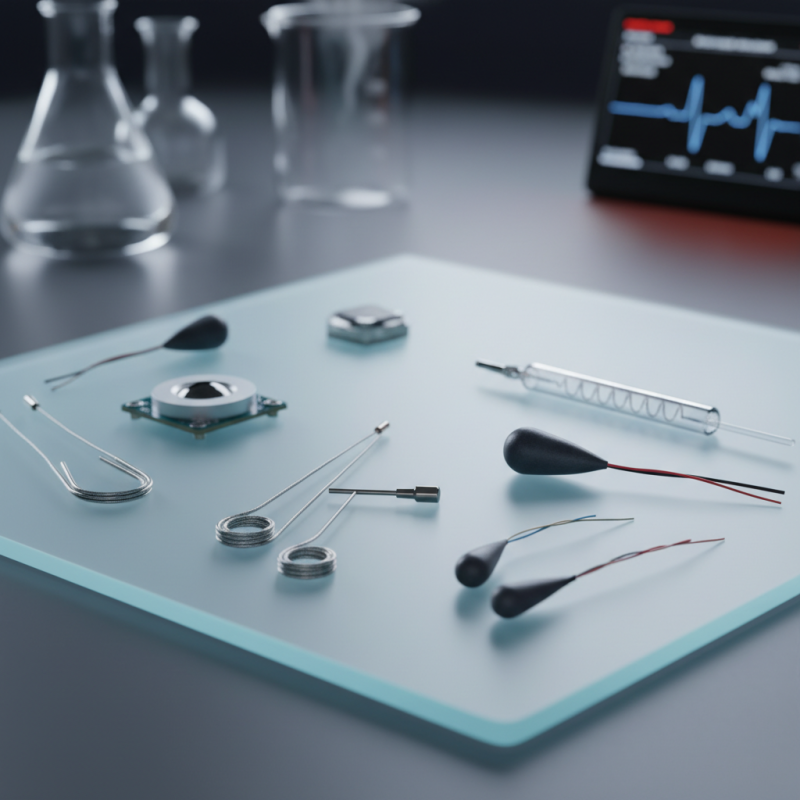
Overview of Thermometer Sensor Types for Accurate Measurements
When choosing a thermometer sensor, accuracy is key. Different sensor types serve various purposes, each with unique strengths and weaknesses. Thermocouples are popular due to their wide temperature range. They are cost-effective and responsive. However, they may require calibration for precise measurements.
Resistance temperature detectors (RTDs) offer high accuracy and stability. They work well in controlled environments. Yet, they are generally more expensive than thermocouples. Infrared sensors provide contactless measurements, ideal for quick checks. Yet, they can be influenced by surrounding temperatures, leading to errors.
Thermistors are highly sensitive. They provide rapid response times in narrow temperature ranges. However, they may struggle outside their optimal range. Each sensor type has potential pitfalls. Understanding these can lead to better decision-making. Selecting the right thermometer sensor is not always straightforward. It requires careful consideration of the specific application's needs.
2026 Best Thermometer Sensor Types for Accurate Measurements
| Sensor Type |
Measurement Range |
Accuracy |
Response Time |
Applications |
| Thermocouple |
-200°C to 2000°C |
±1°C |
< 1s |
Industrial applications, automotive |
| Thermistor |
-50°C to 150°C |
±0.1°C |
< 5s |
Medical devices, HVAC systems |
| RTD (Resistance Temperature Detector) |
-200°C to 850°C |
±0.5°C |
< 5s |
Laboratories, food processing |
| Infrared Sensor |
-50°C to 1000°C |
±2°C |
< 1s |
Non-contact temperature measurement |
| Bimetallic Sensor |
-50°C to 600°C |
±2°C |
< 10s |
Heating systems, automotive |
Key Characteristics of Accurate Thermometer Sensors
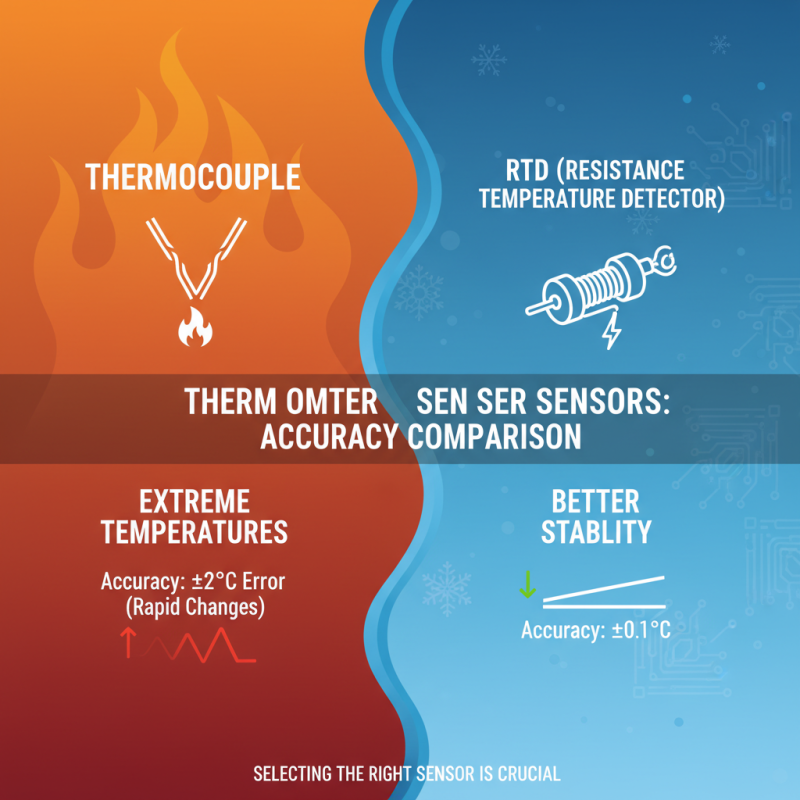
In the quest for precise temperature measurements, selecting the right thermometer sensor is crucial. Key characteristics influence accuracy. Thermocouples, for instance, can tolerate extreme temperatures, but their accuracy may waver under rapid changes. Studies indicate that thermocouples can yield errors of up to 2°C in certain conditions. In contrast, resistance temperature detectors (RTDs) provide better stability. They can achieve accuracy levels within ±0.1°C.
In the realm of infrared thermometers, detection speed is impressive. They give results in less than a second. However, they are affected by surface emissivity, which can lead to misinterpretations. In applications where precision is non-negotiable, this can be a significant drawback. Moreover, thermistors offer high sensitivity and are cost-effective. Yet, their limited temperature range can be a concern in varied environments.
Ultimately, the choice of sensor depends on your specific needs. While some sensors deliver speed, others prioritize accuracy. It’s essential to weigh these characteristics carefully. Understanding these limitations can be the first step towards achieving better measurement standards.
Comparison of Contact vs Non-Contact Thermometer Sensors
When choosing thermometer sensors, it's essential to understand the difference between contact and non-contact types. Contact thermometers measure temperature via direct contact with the object. These sensors provide accurate and reliable measurements, making them ideal for clinical settings and laboratory environments. They typically have a response time of 1-2 seconds but can be influenced by external factors like pressure and surface condition.
Non-contact thermometers, on the other hand, use infrared technology to detect heat emitted from an object. They are quicker, with response times of less than one second. These devices are convenient for measuring surface temperatures from a distance. However, accuracy can decrease due to environmental influences, such as air currents and reflective surfaces. A study shows that non-contact models can have a variance margin of 0.5°C - 1.0°C, which may not be acceptable in all applications.
Tips: Always ensure proper calibration of your thermometers, especially if you switch between types. Regular checks help maintain accuracy. For non-contact types, avoid reflective surfaces to enhance measurement reliability. Choosing the right thermometer sensor depends on your specific needs. Simple adjustments can significantly improve consistency in your readings.
Applications of Different Thermometer Sensor Types
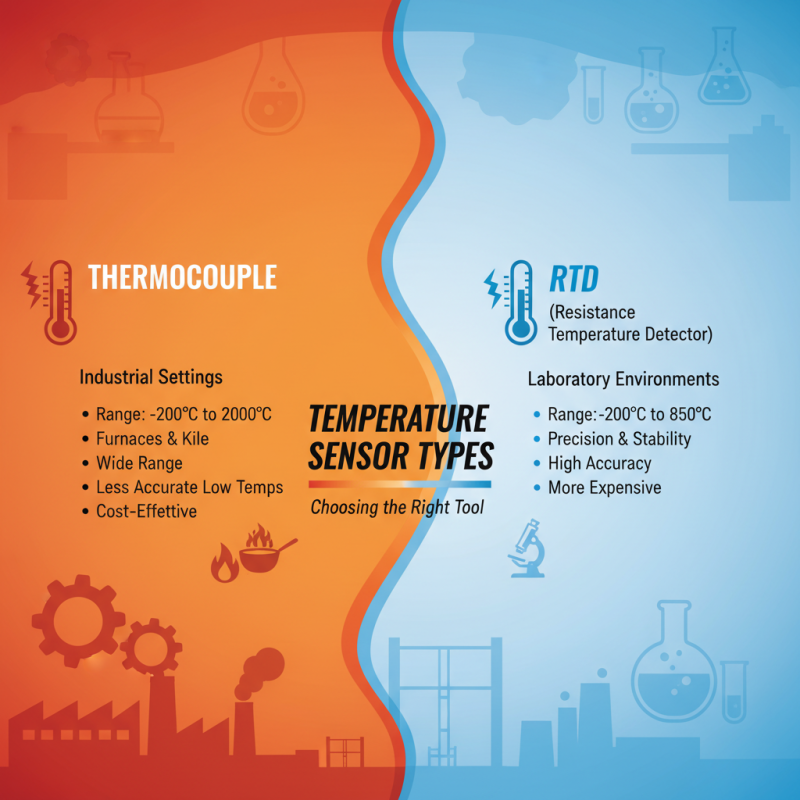
Thermometers come in various sensor types, each suited for specific applications. Thermocouples are popular in industrial settings due to their wide temperature range, from -200°C to 2000°C. These sensors are often used in furnaces and kilns. However, they can suffer from accuracy issues at lower temperatures. In contrast, resistance temperature detectors (RTDs) offer better precision and stability. They are ideal for laboratory environments, with temperature ranges typically between -200°C to 850°C. But RTDs can be more expensive.
Infrared thermometers serve a different purpose. They measure surface temperatures without contact. This makes them invaluable in food safety and medical applications. Studies indicate that proper use can achieve ±0.5°C accuracy. Yet, they can be influenced by surface emissivity. This is crucial when interpreting measurements. Off-the-shelf solutions aren’t always perfect for every surface.
Thermistor sensors are another alternative, widely used in HVAC systems. These devices respond quickly to temperature changes and can be highly accurate. However, they have a limited range, typically up to 150°C. Choosing the right sensor often requires careful consideration of the specific requirements. Each sensor type has distinct advantages and shortcomings, making the task of selecting the best one challenging.
Future Trends in Thermometer Sensor Technology for Precision Measurements
The future of thermometer sensor technology is promising, focusing on enhanced precision and versatility. Emerging sensors use materials like graphene for improved thermal conductivity. These advancements could lead to quicker response times and accurate readings.
New developments in wireless technology are changing how we measure temperature. Sensors can now connect to smart devices, offering real-time data tracking. This integration allows for easy monitoring in various environments. However, the reliability of wireless connections can be problematic.
Another trend is miniaturization. Smaller sensors are becoming more common in diverse applications. From healthcare to industrial use, compact sensors provide flexibility. Yet, ensuring accuracy in such tiny devices poses a challenge. The industry needs to address potential discrepancies in measurement. This aspect calls for ongoing research and innovation to improve reliability.
2026 Best Thermometer Sensor Types for Accurate Measurements